In the summer of 2025, I had the opportunity to participate in Blended Intensive Program organized by CIVIS in the beautiful city of Salzburg. The course started in February of this year and we had about a 2-hour online session every month on various urban planning topics. I think the best part of the course was writing the homework assignments, during which I realized several times how many good things my hometown and Budapest are equipped with when it comes to being close to nature. Of course, my hometown - Hódmezővásárhely, in the southern part of the Great Plain - is much closer to nature than the capital, but it still filled me with pride to be able to report on existing parks dotted with biodiverse vegetation, outdoor gyms, running tracks under trees, sunbathing meadows, recreational parks, community gardens and composters, bee pastures, etc.
1st day - 30.06.2025.
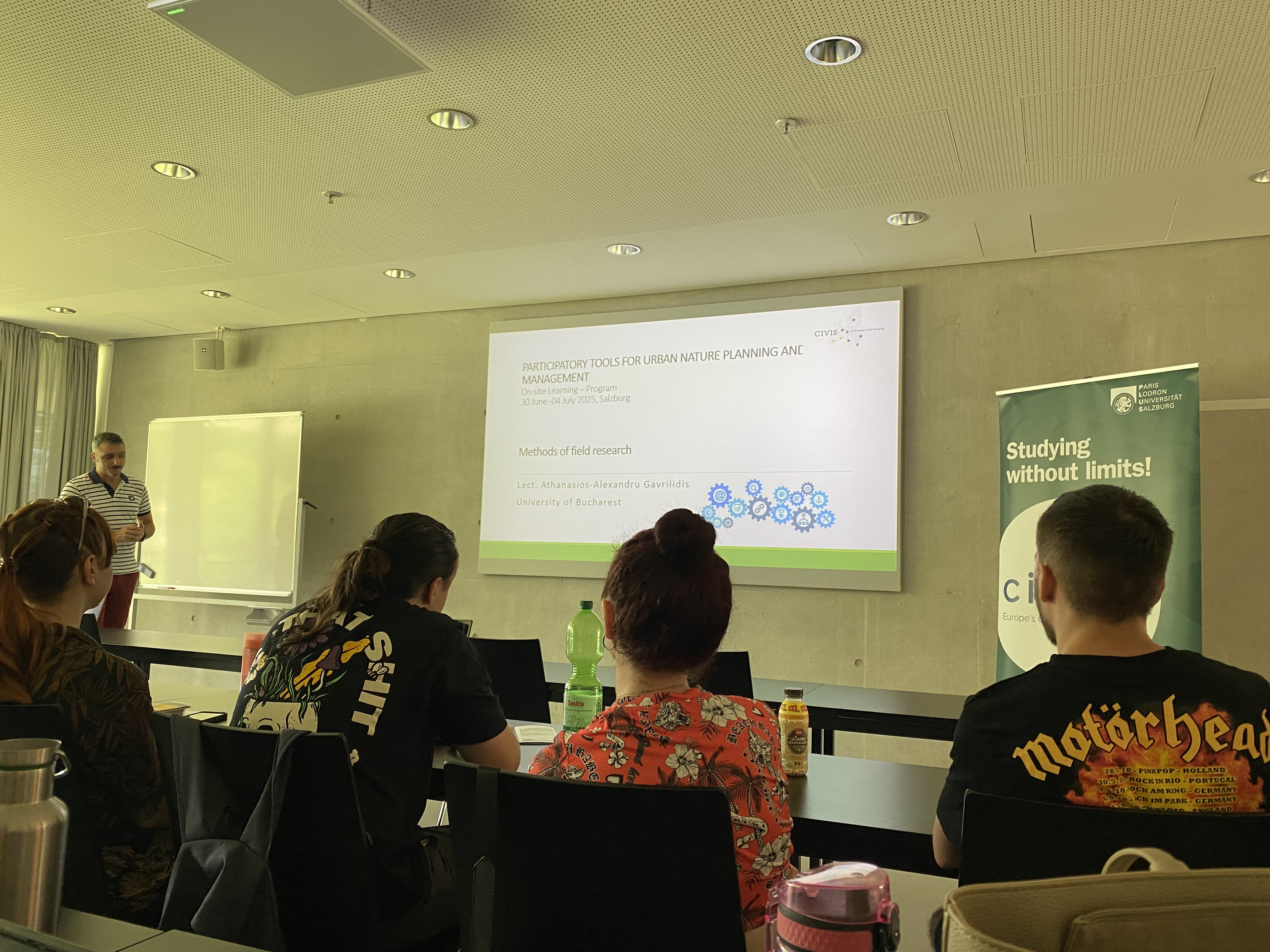
Getting to know the team members, presentations about the program, sustainability and climate change from the perspective of urban planning.
On the first day, we were given an insight into the physical program regarding the Salzburg part of the BIP. The teams and the distributed areas were introduced, I was assigned to the yellow team, so our team's area included the Hans-Donnenberg Park, the Leopoldskron pond and the part of the Almkanal closest to the city. For the field survey, the software and tools that we had to use for field data collection were introduced. Fortunately, the ArcGIS Online interface and ArcGIS Field Maps were not new to me, as I had already used these software when preparing my BSc thesis, when the application was still called ArcGIS Collector (Classic). (Since then, I have also tried the QGIS QField application, which also works very well for field data collection even in offline mode, with the option of later data synchronization.)
2nd day - 01.07.2025.
Visit to Berchtesgaden National Park & Königsee lake.
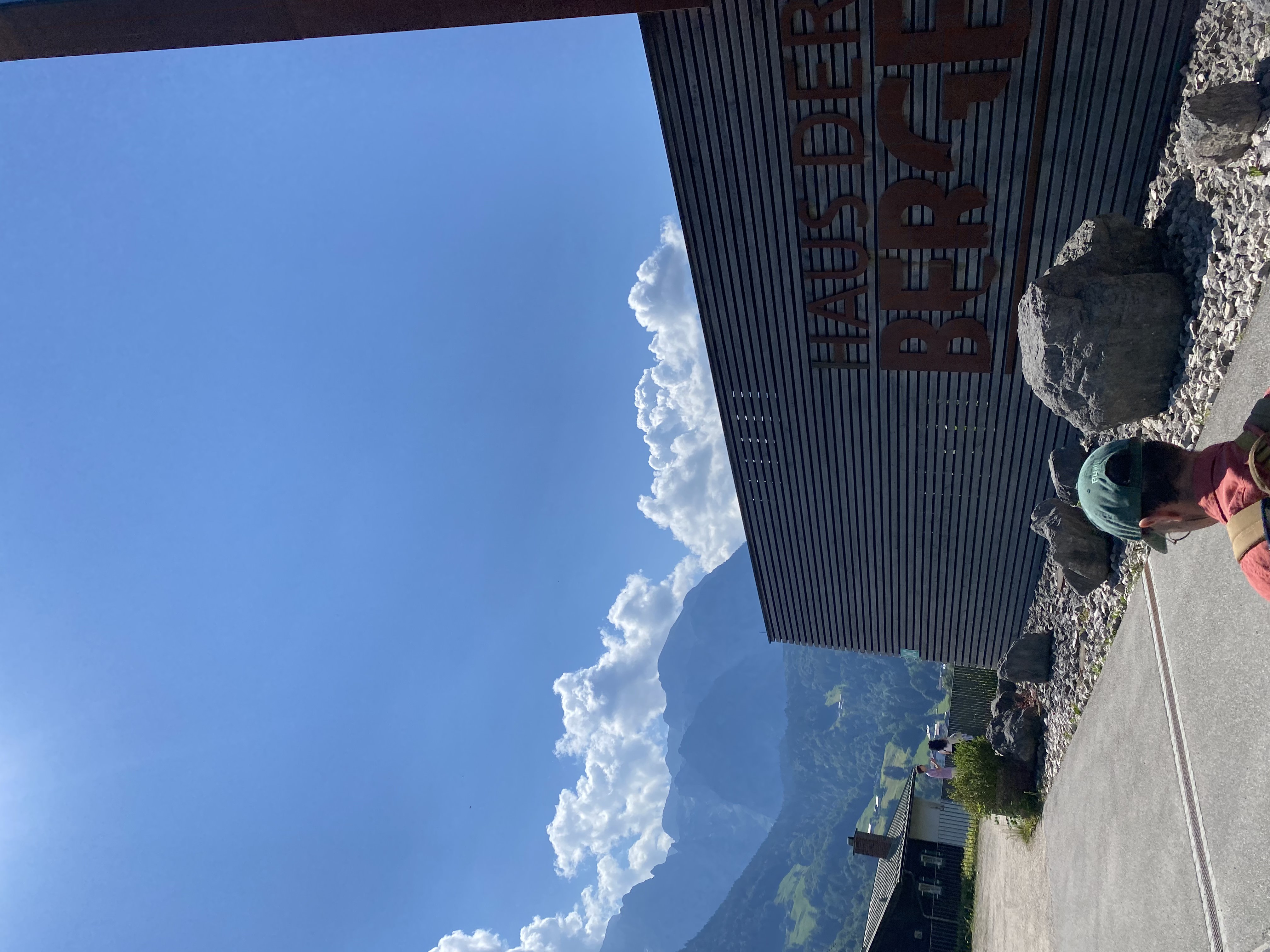
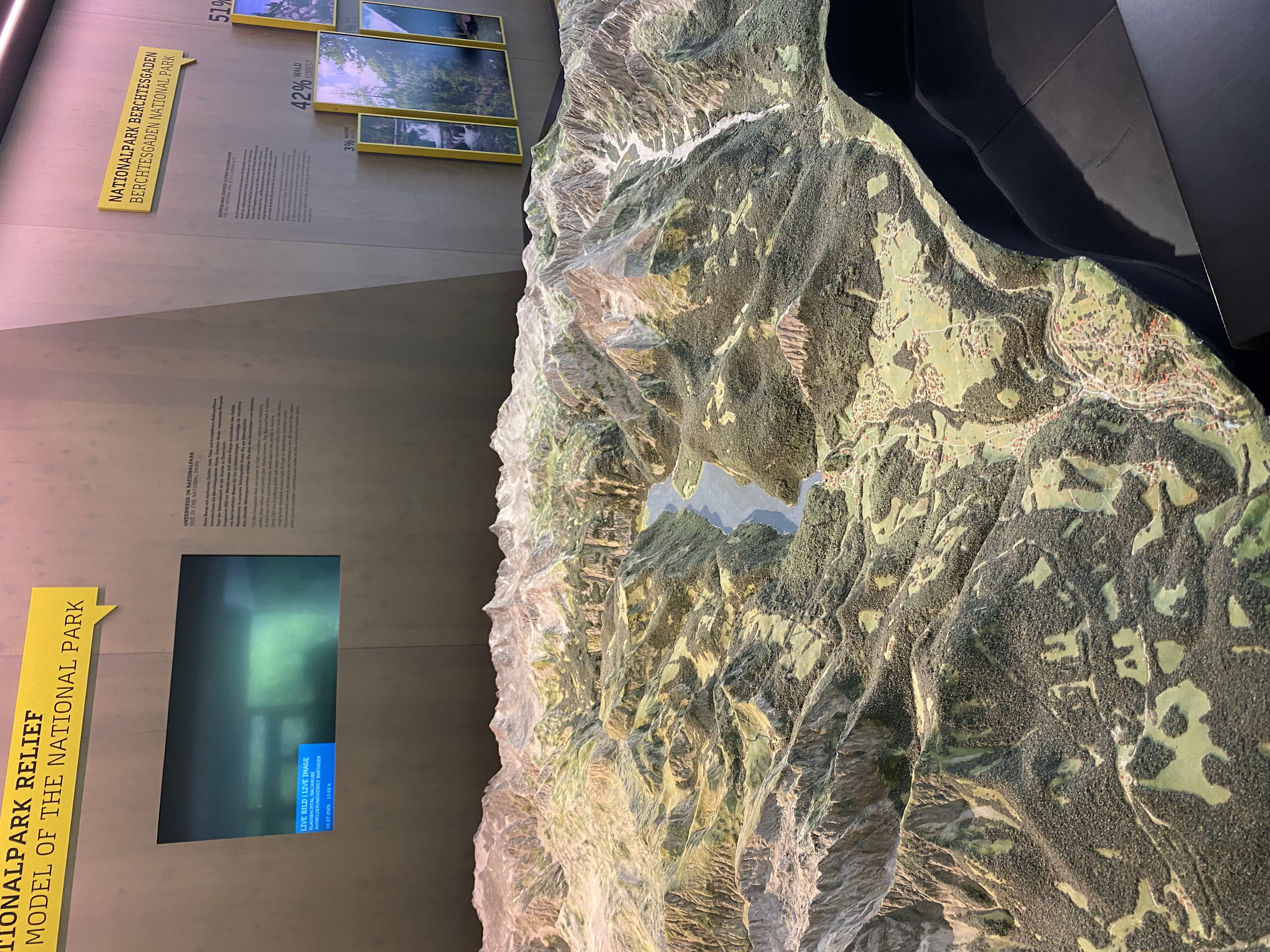
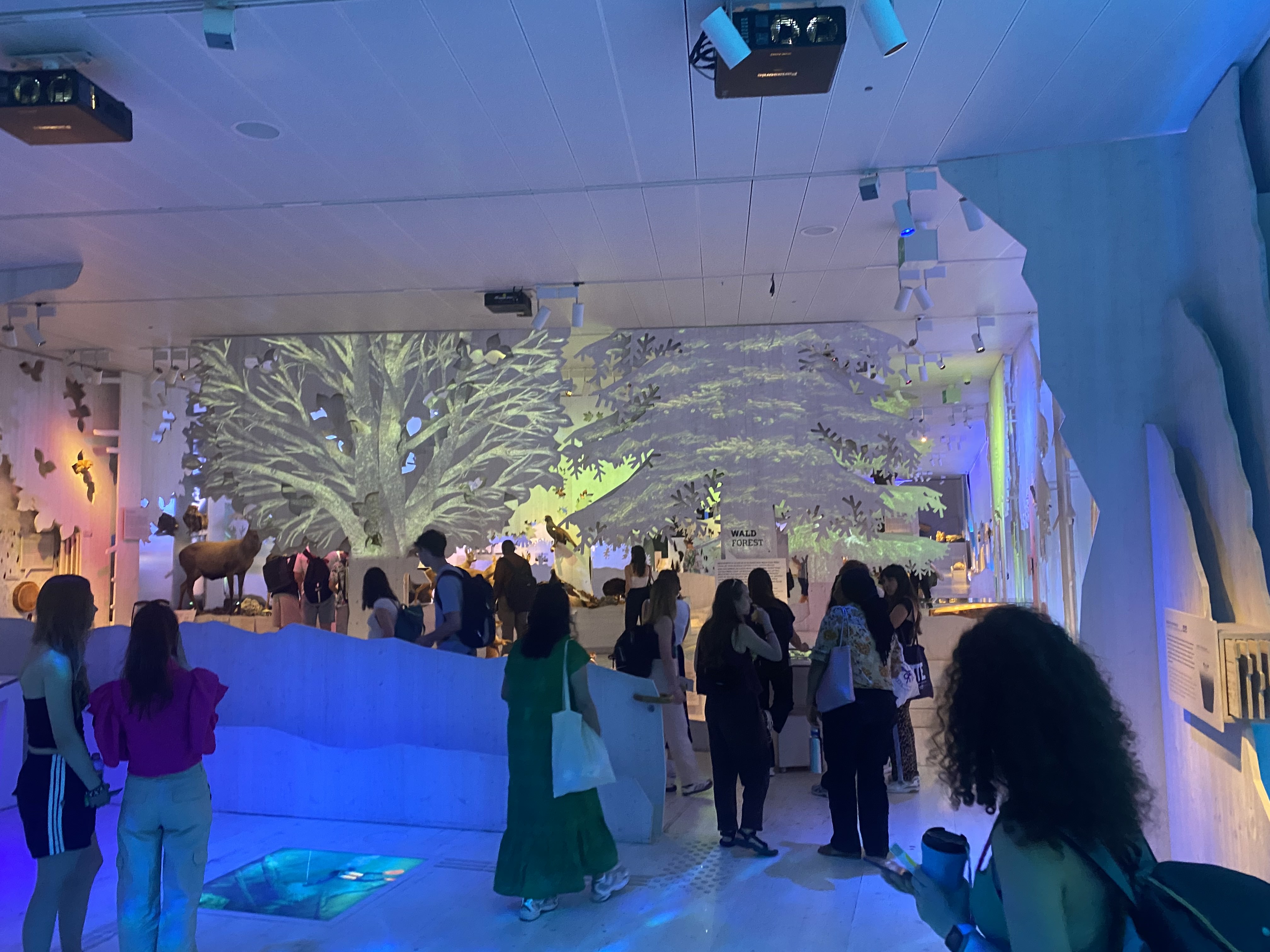
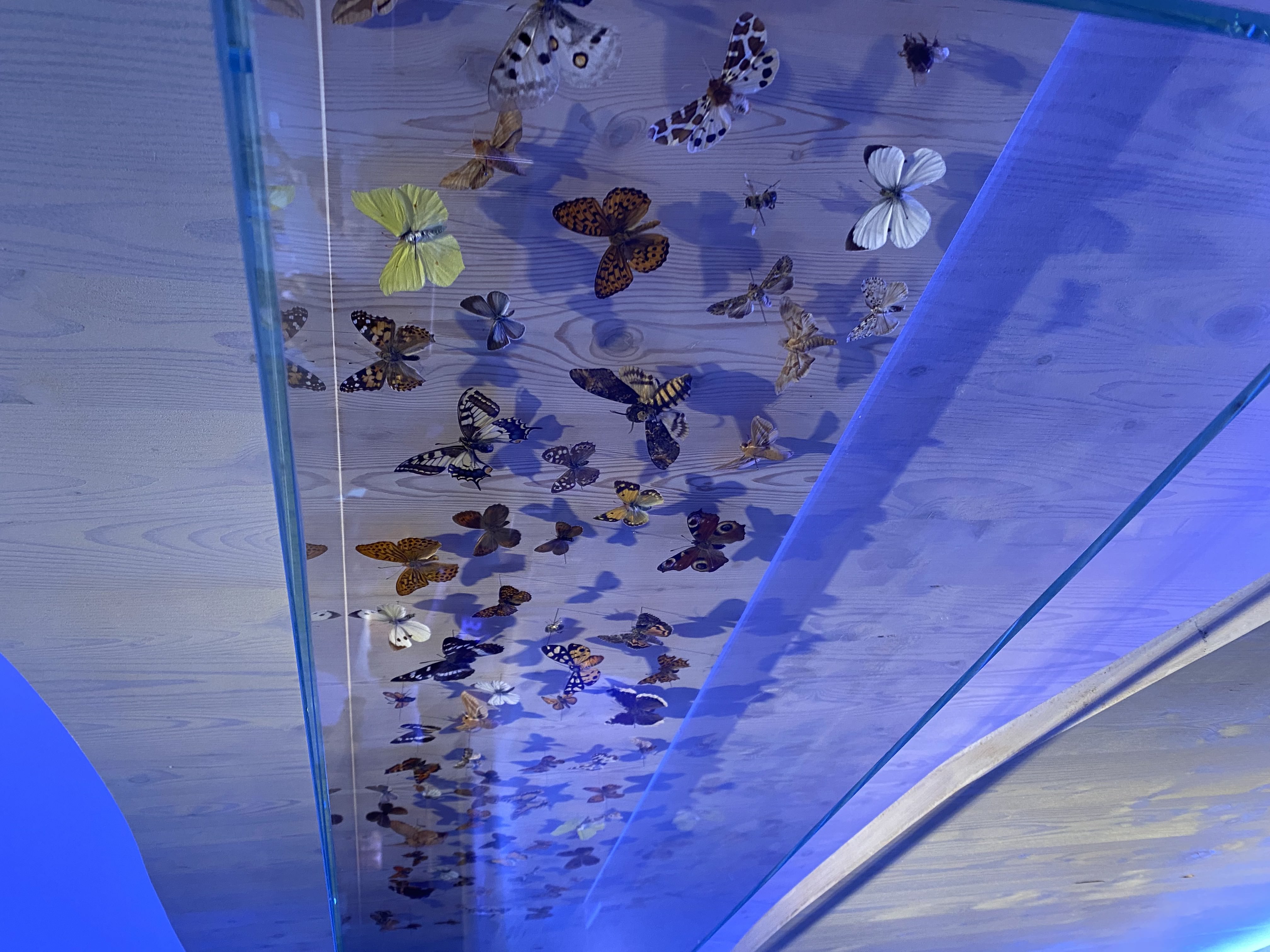
In the morning we took a bus trip to Germany, and although the Berchtesgaden National Park does not seem particularly urbanistic at first glance, national parks play an important role in protecting nature and animal species, as well as in maintaining and preserving ecological diversity. As part of the program, we visited the national park visitor center. Although not directly connected to the urban infrastructure, the exhibition plays a key role in promoting environmental awareness and ecological literacy - both of which are the basis for sustainable urban and regional planning. By allowing visitors to learn about alpine biodiversity, forest ecosystems and native species, the center indirectly promotes greener thinking, which can influence future decision-making for both younger and older generations.
After the museum, we visited a closer part of the park - much to my regret, we didn't do a small tour, just a very short walk where one of the park rangers told us about the relationship between the park and nature lovers. It was quite interesting to listen to the emerging problems and conflicts between modern man and untouched nature. While introducing the park, the ranger emphasized how much impact, for example, the posts of internet influencers can have on these protected and very valuable areas in recent years. I found one story particularly interesting, according to which a few years ago a famous internet personality posted about the Königsee waterfall in the protected area, which increased its attendance so much that the park workers were forced to close it to visitors, as people trampled the protected vegetation, threw their garbage around and caused significant damage around the waterfall. This story was quite sad to hear, because who wouldn't want to go to such places and know how much damage was caused by a few irresponsible people...
The lady working there also talked a lot about an interesting conflict, according to which e-biking, which is becoming increasingly popular these days, is causing quite a lot of problems in the national park. Since the Covid period, the number of visitors to the park has suddenly increased anyway, and more and more unprepared hikers are taking on the advanced and extreme hiking trails, which sometimes even act as rescue units, but these semi-electric bikes provide an opportunity for more and more people to cycle in the park at any time of the day. This way, they can disrupt the daily rhythm of local species, the breeding seasons and basically the environmental load on nature much more intensively.
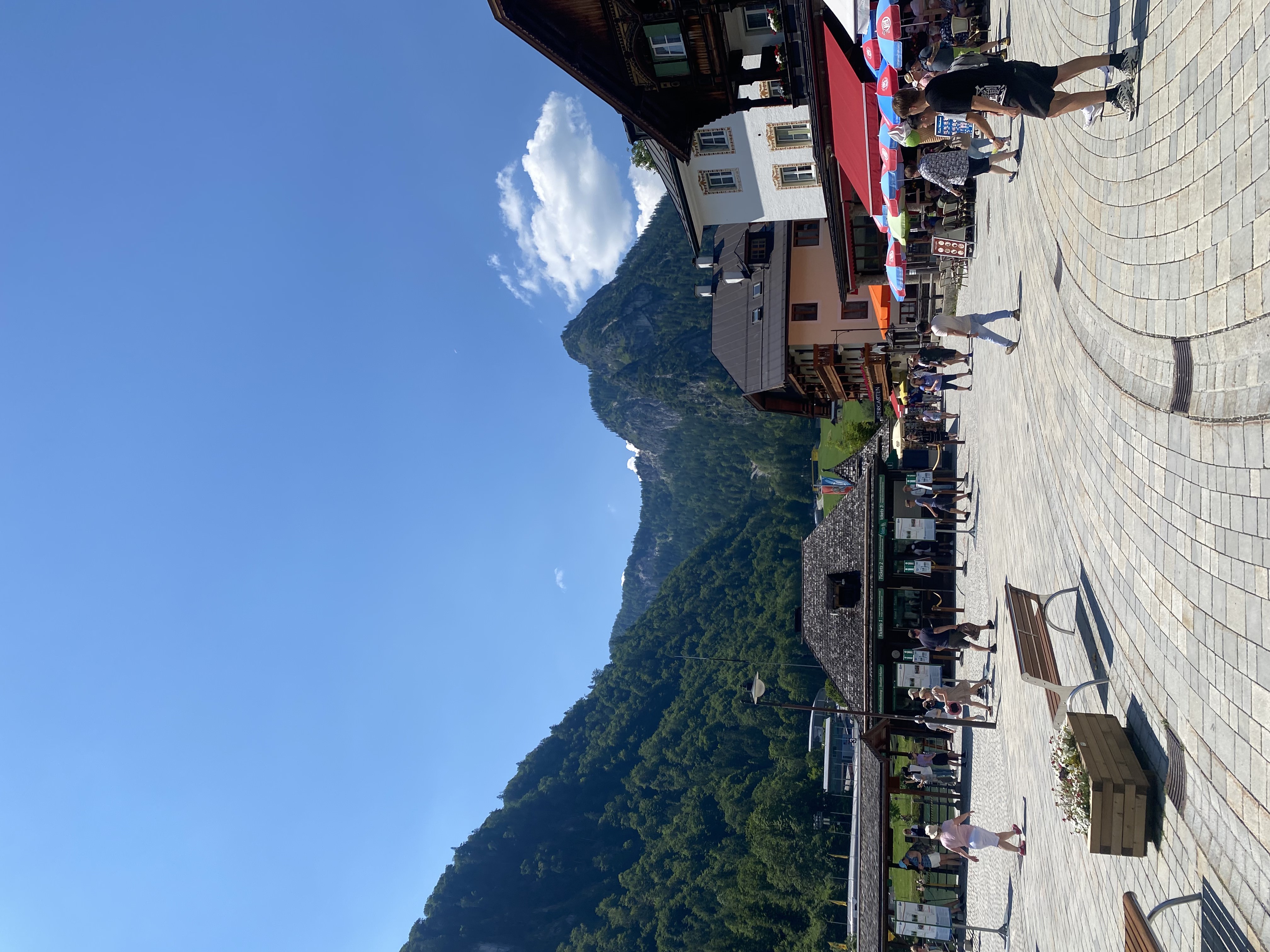
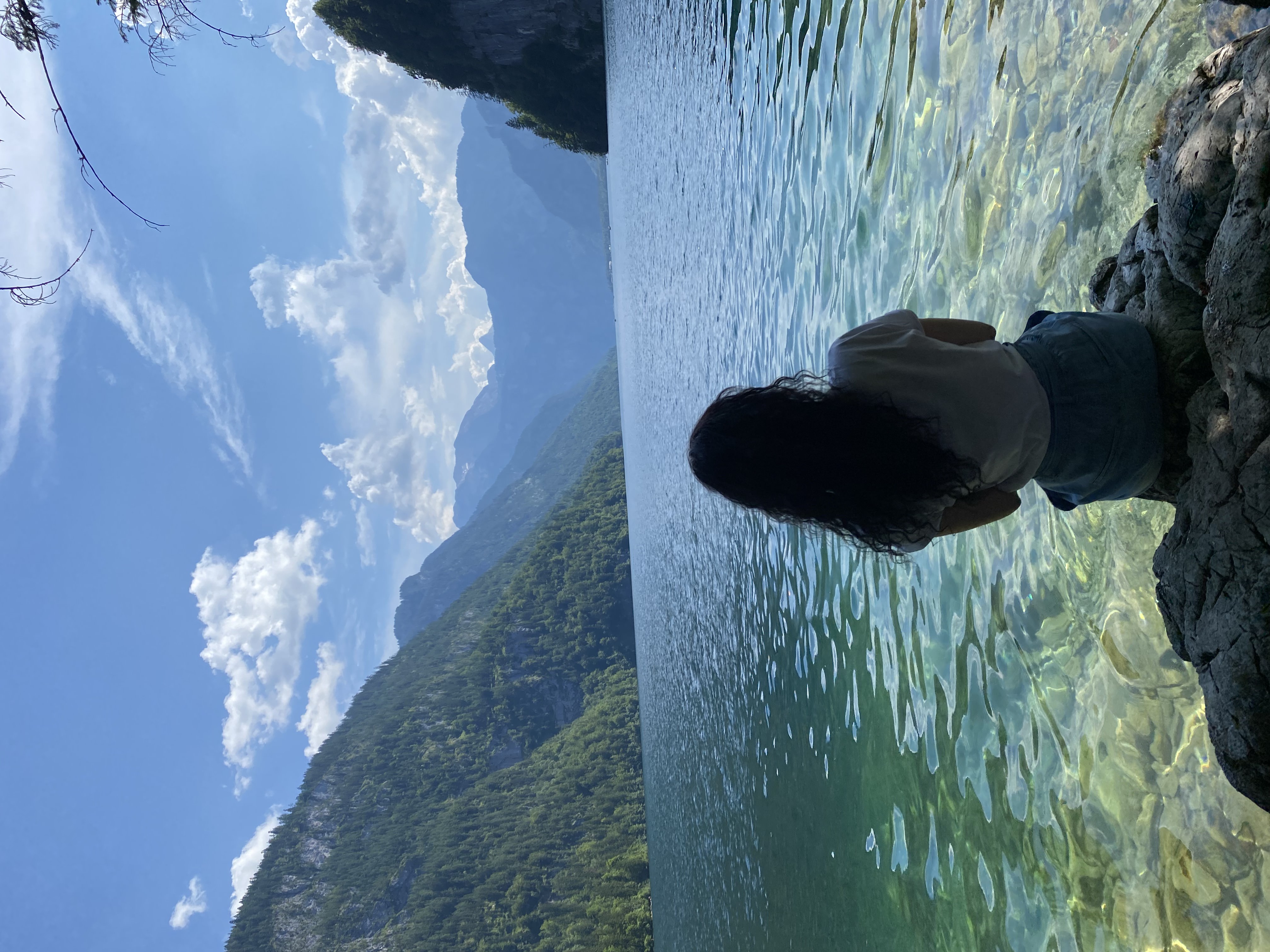
Although our visit to Königssee was not strictly focused on urban planning, the site showed many examples of sustainable urban structure and tourist center. Only electric boats have been operating on the lake since 1909, which are operated by batteries charged at night - thus reducing noise pollution and environmental impact on the lake. The built-up area is relatively low in the area, fitting into the landscape - traditional alpine houses, pastures and forests nearby (cultural sustainability). The buildings were mostly made with traditional materials, mainly wooden roofs and stone floors - architecture with a smaller ecological footprint. The pedestrian street was paved with light-colored cobblestones, which can also help to strongly reflect sunlight and help rainwater runoff and contribute to a more aesthetic cityscape (preserving local architectural traditions) - although it is important to mention that it is not accessible to everyone. It is not possible to drive in the village by car, upon arrival there is a large parking lot for buses and tourists to park their cars.
3rd day - 02.07.2025.
AGIT conference and walk at the Tricky Fountains garden in the Hellbrunn Palace
That morning I had the opportunity to listen to a fascinating presentation on landscape analysis in urban ecology, using the city of Salzburg as an example. It really opened my eyes to the fact that cities are not just made of concrete and buildings, but are dynamic, living systems where green spaces, infrastructure and land use interact. The speaker explained how tools such as satellite imagery, GIS and spatial analysis can be used to map things like fragmentation, connectivity and changes in land cover over time. In the case of Salzburg, it was particularly interesting to see the role that green corridors play in connecting parks and supporting biodiversity, or how urban sprawl affects the natural balance. The main lesson for me was how this kind of analysis can support smarter urban planning – helping cities to be more resilient, sustainable and better prepared for the future. This really showed how ecology and technology can work hand in hand to make our urban spaces healthier for both people and nature.
We spent the afternoon in the gardens of Hellbrunner Castle, which was also one of my favorite parks during the time I lived in that area. The park is huge and has a lot of good features when it comes to urban green spaces. Although the park is not directly in the city, it is very easy to reach on foot, by bike or by public transport. There are large fields where residents usually play badminton, frisbee or just have a picnic, and families have a large and safely equipped wooden playground with their children. The park had a lot of mountain and meadow flowers in bloom in the spring when I visited, but I also met several squirrels and the lakes are full of fish. Not far away, in the immediate vicinity of the park, is the Salzburg Zoo, which was also an unforgettable experience - maybe I shouldn't include it here, but I visited it with my mother at the beginning of the summer and it was one of the best zoos I have ever seen.
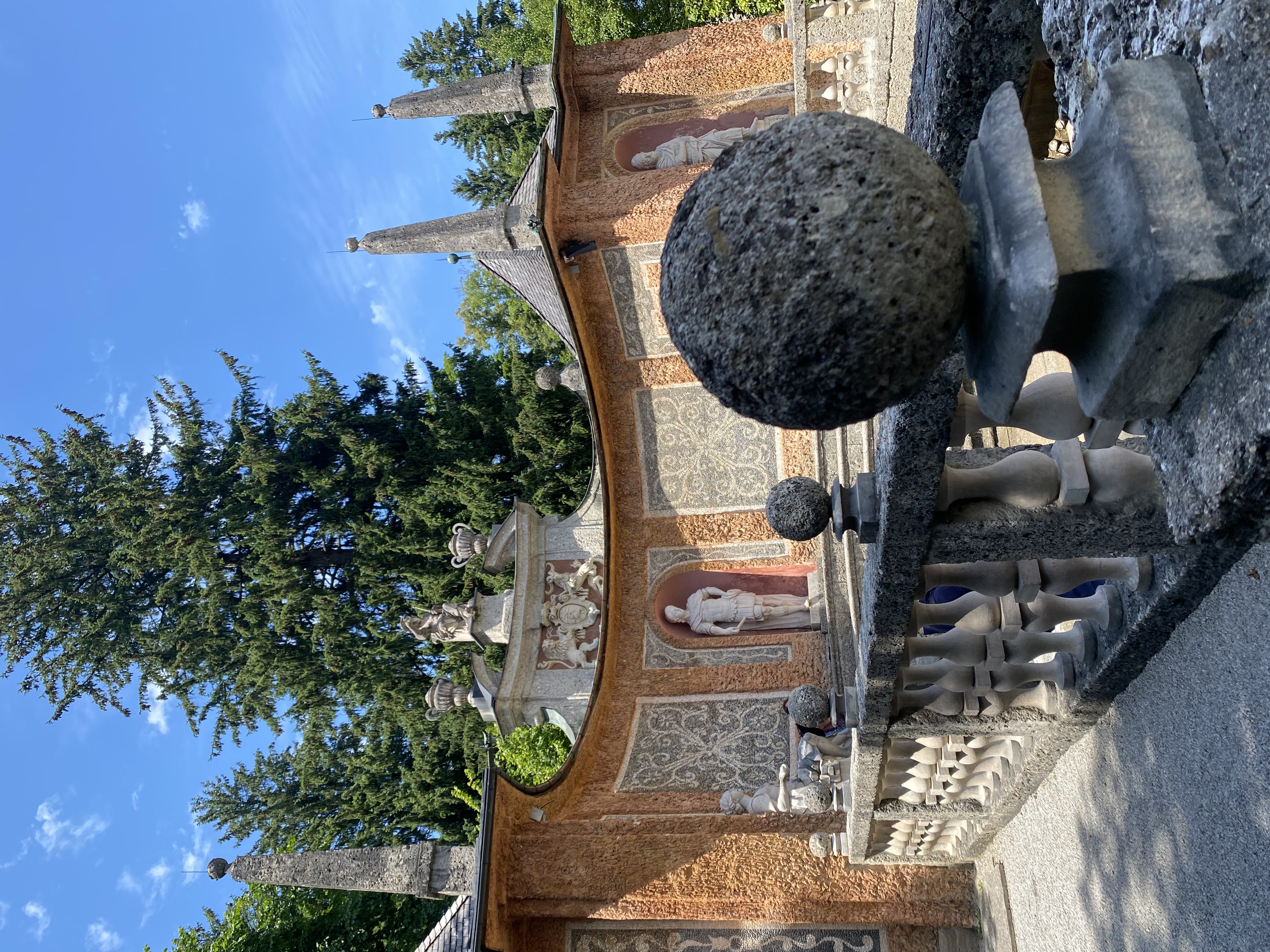
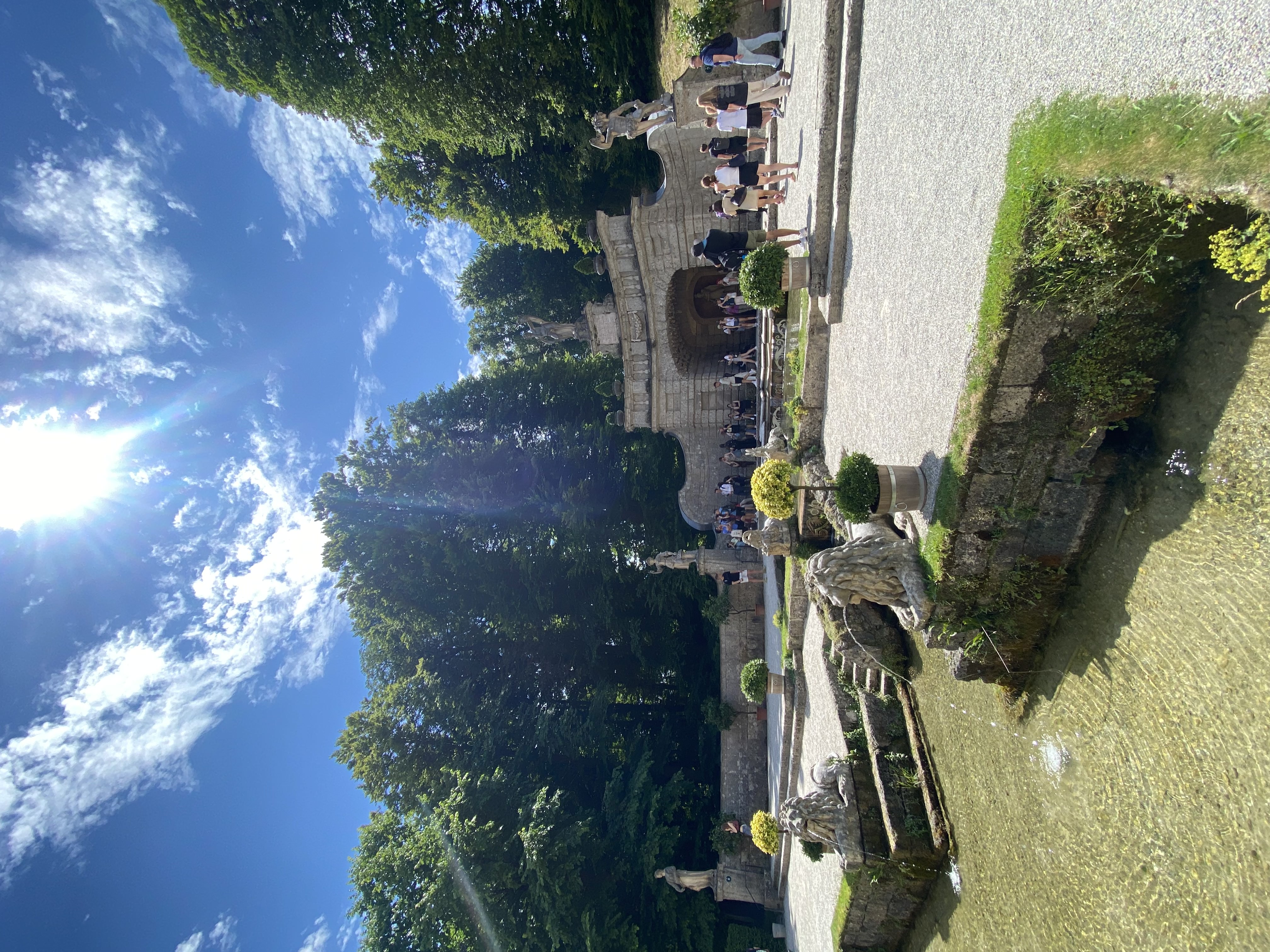
We were able to take part in a guided walk at the Tricky Fountains during the BIP, which was a very pleasant & refreshing experience during the heat waves on that week.
4th day - 03.07.2025.
AGIT 2025 Conference & walking around in our study area
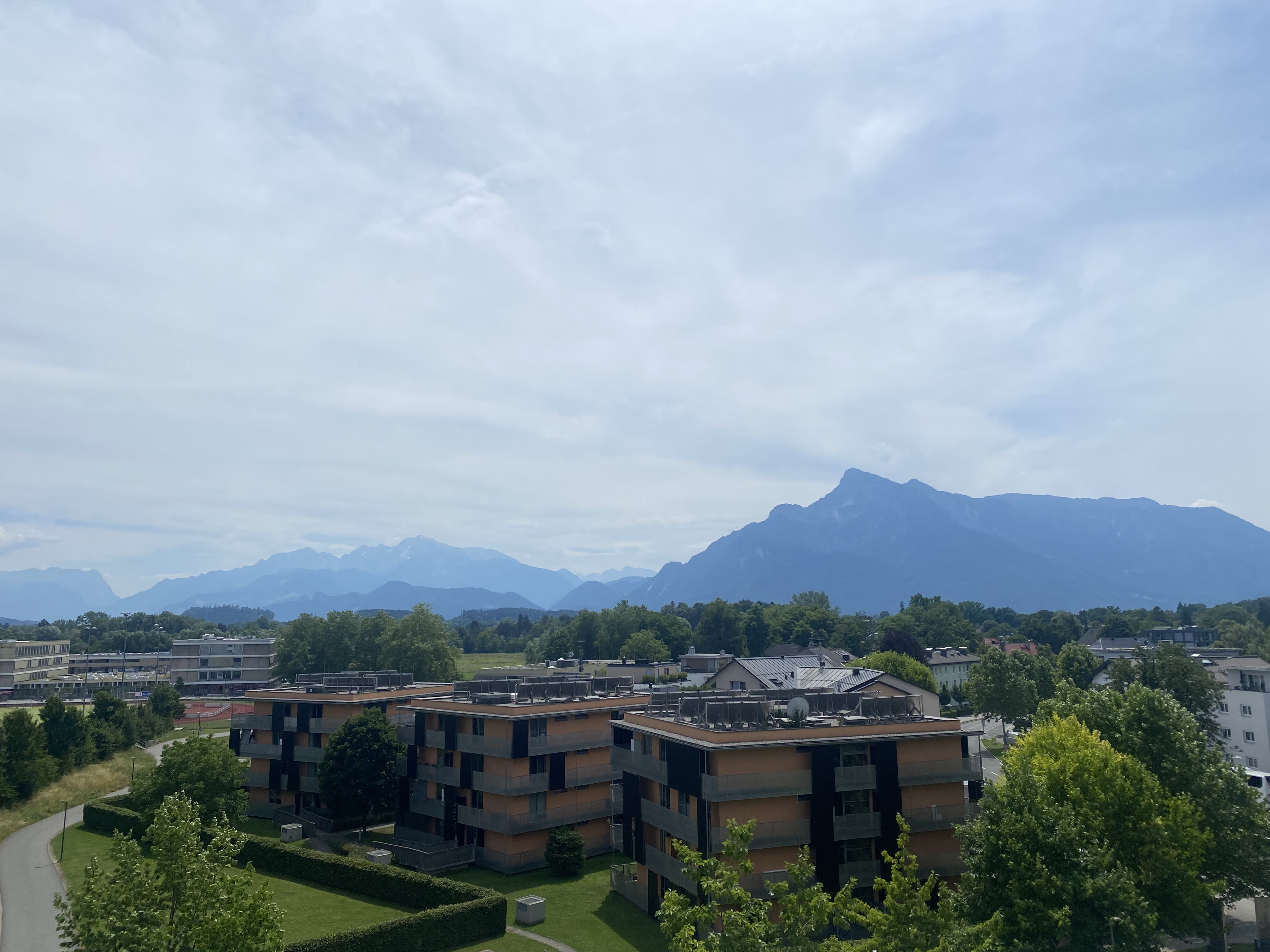
We spent the morning at the AGIT conference in the Faculty of Natural and Life Sciences building of the University of Salzburg. I think the choice of location was very lucky for this conference, I have been a resident of the dormitory on the 1st street since September and I really liked living in this area (for the last months of summer I will be living in another part of the city), because it is a very green and calm area. In the immediate vicinity of the university building there is a botanical garden, with an excellent view of the fortress, a pond, the famous Hellbrunner road leading close to the palace and sports fields as well as well-used bike and running paths. I also really liked the building, bright from the inside with many windows and as if there was a whole palm house in the middle of the hall. I managed to listen to 1-2 presentations here, but I mainly stayed at the CDE booth where visitors could try out the DEMO version of the game we developed (more on that in another blog post...)
Later we walked to the nearby small gardens - namely Kleingartenverein Thumegg, through the Hans-Donnenberg Park, paying special attention to the presence of urban green spaces and facilities. These gardens are in a separate area where local residents can rent a plot of land and grow local vegetables and fruits, and spend a few hours a day gardening and relaxing, close to nature. The area around the small houses is very tidy and quiet, separated, although people cannot spend the night here and they have to pay for the rent, this can be a very useful feature of the garden suburb area. During our walk led by Professor Cristian Ioja, we could hear some interesting facts about the area. Since the cold weather had unfortunately arrived, we returned to UNIPARK with the yellow team before the storm, where we met to discuss the details of the final project, as we had to present our observations and suggestions regarding the studied area the next day. The team had mapped the area on Monday, so the maps were already in preparation and we put together a sketch plan together with the others for the presentation the next day. I was happy to be a useful member of the team, having lived in the area for about 9 months, so I was able to contribute during the evening by sharing my own experiences, as I have been to these parks in almost all seasons to run, walk and take photos and to the Almkanal to swim and relax.
5th day - 03.07.2025.
Final presentations and closing pizza-party
On the last day, each team presented their final project to the professors, where they had a joint discussion about the topics that arose. It was very interesting to hear the feedback and the different experiences that we, the CDE students and the other visiting students, had during their 1 week visit in Salzburg.
Visit CIVIS BIP webpage ← Back to Blog