The final week of the online course, which started in February, took place in June 2026, where my group mates and I were able to meet each other in person and with the professors joining from the University of Lausanne and the University of Bucharest.
During the online classes, we were able to examine the forces and movements that shape mountains from many perspectives, such as the effects of geomorphology and hydrology on mountain areas. We also listened to lectures on moraines formed by glaciers and their formation, as well as learning about various changes in alpine vegetation and fauna during the spring semester. Taking all this together, we were able to get to know various remote sensing and satellite observation-based methods in more depth, which we could apply in real conditions in the practical part of the field.
1st day - 01.06.2026.
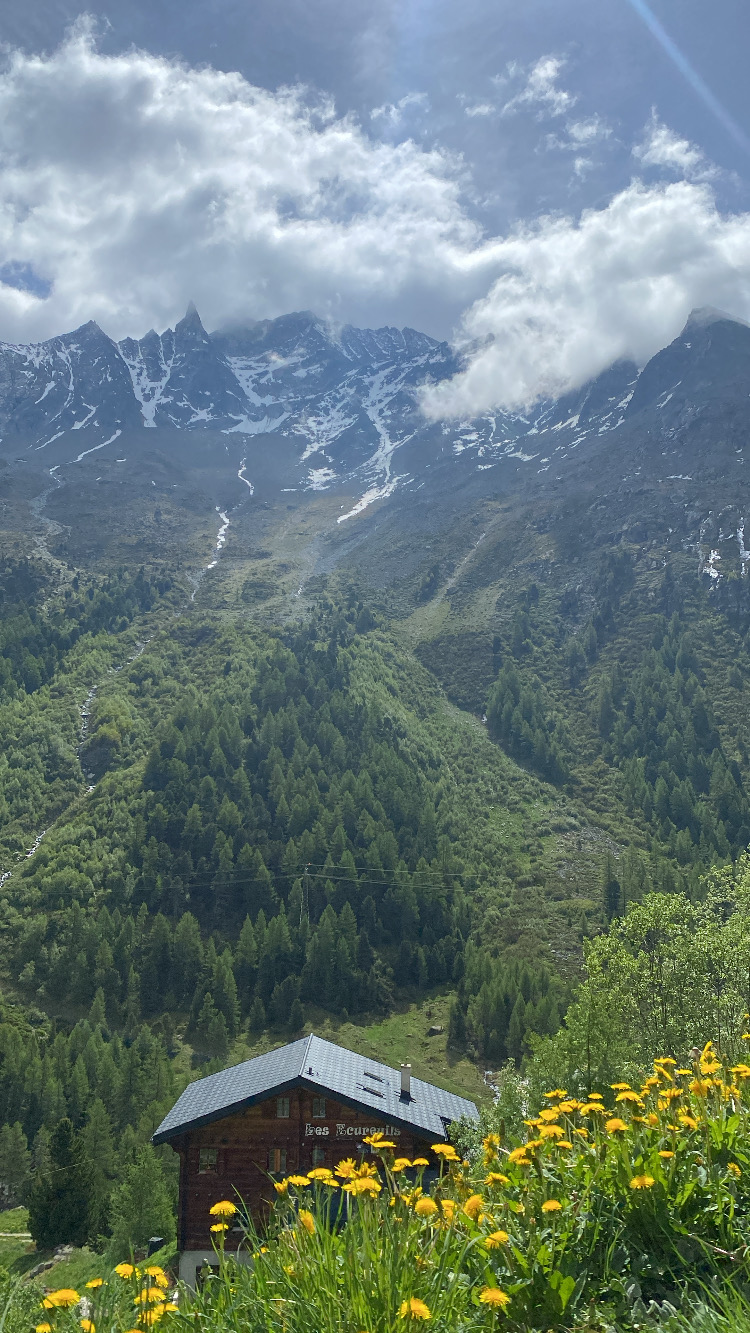
Visiting the magnificent Pyramides d’Euseigne, hiking from Arolla to the Glacier de Tsijiore Nouve.
The first day was already quite an intense climb, which was an excellent opportunity to get to know my fellow participants even better after the evening of day 0. The main goal of my application was to meet like-minded people and everyone was very open and had a very mixed education. Most of them were from Romania, Greece and Morocco, but there were also some from Switzerland and Germany and I was the only one from Hungary. To my pleasant surprise, there was also another participant from the CDE program, who is currently spending his first year in Salzburg and from September he and his colleagues will replace us in the Czech Republic, in Olomouc.
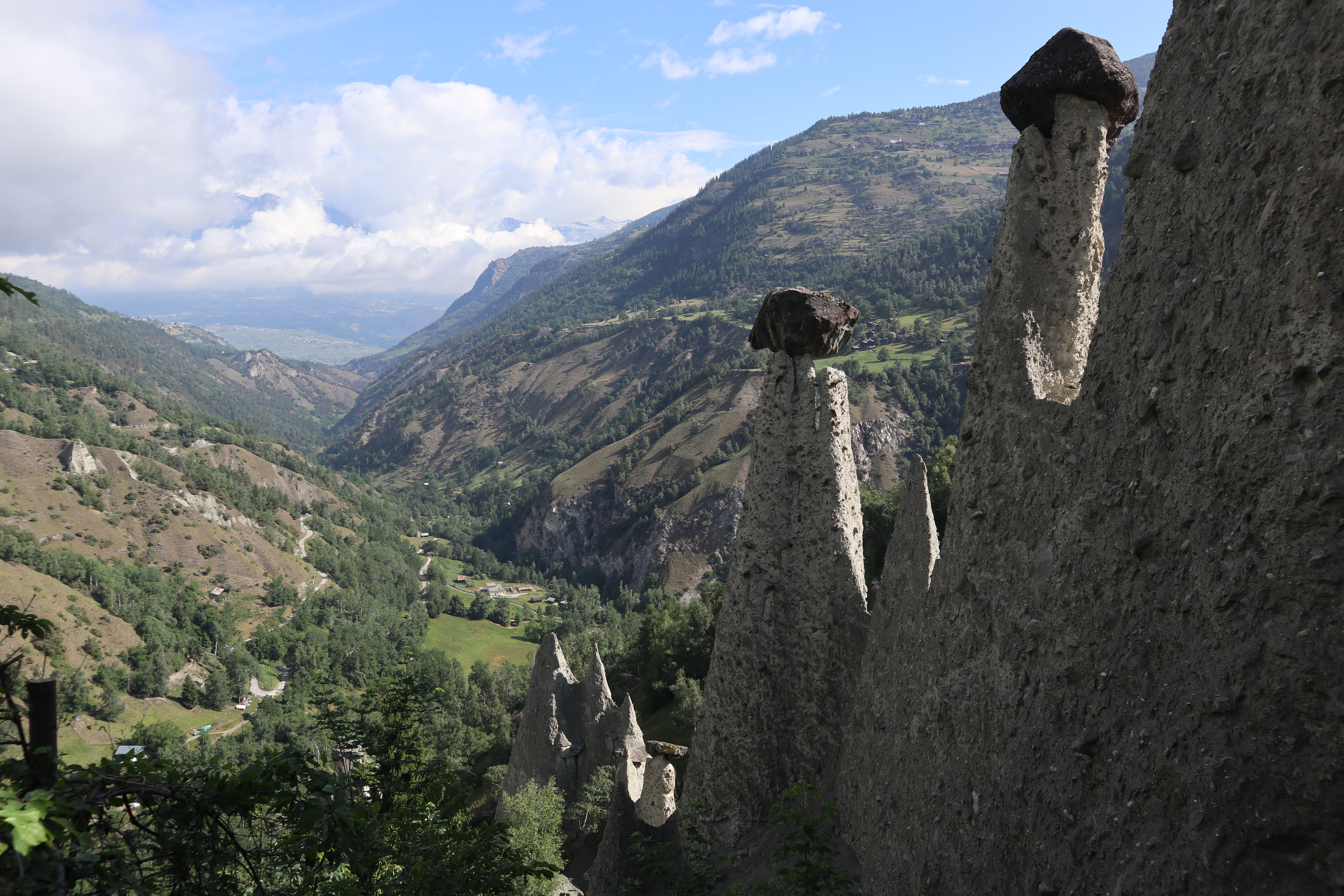
We boarded a bus to the starting point of the excursion and set off for the village of Arolla, deep in the Alps. Halfway there we stopped to admire a very interesting formation, the Pyramids of Euseigne. Which in its current form is a unique form formed from a completely degraded and eroded rock. "The earth pyramids of Euseigne are one of Switzerland's most important geological sights and are protected monuments." "The earth cones are 10 to 15 meters high and most of them are protected by a rock lodged on the top. The cones were created in the end phase of the last Ice Age, about 80,000 to 10,000 years ago. When the ice retreated, glacier tongues left enormous piles of debris behind, which contained boulders. Rain and meltwater gradually freed these boulders. While the water continued to erode and carve out the area surrounding the boulders, these rocks served as protective caps for the soil beneath them, enabling the formation of the well-known natural monuments."
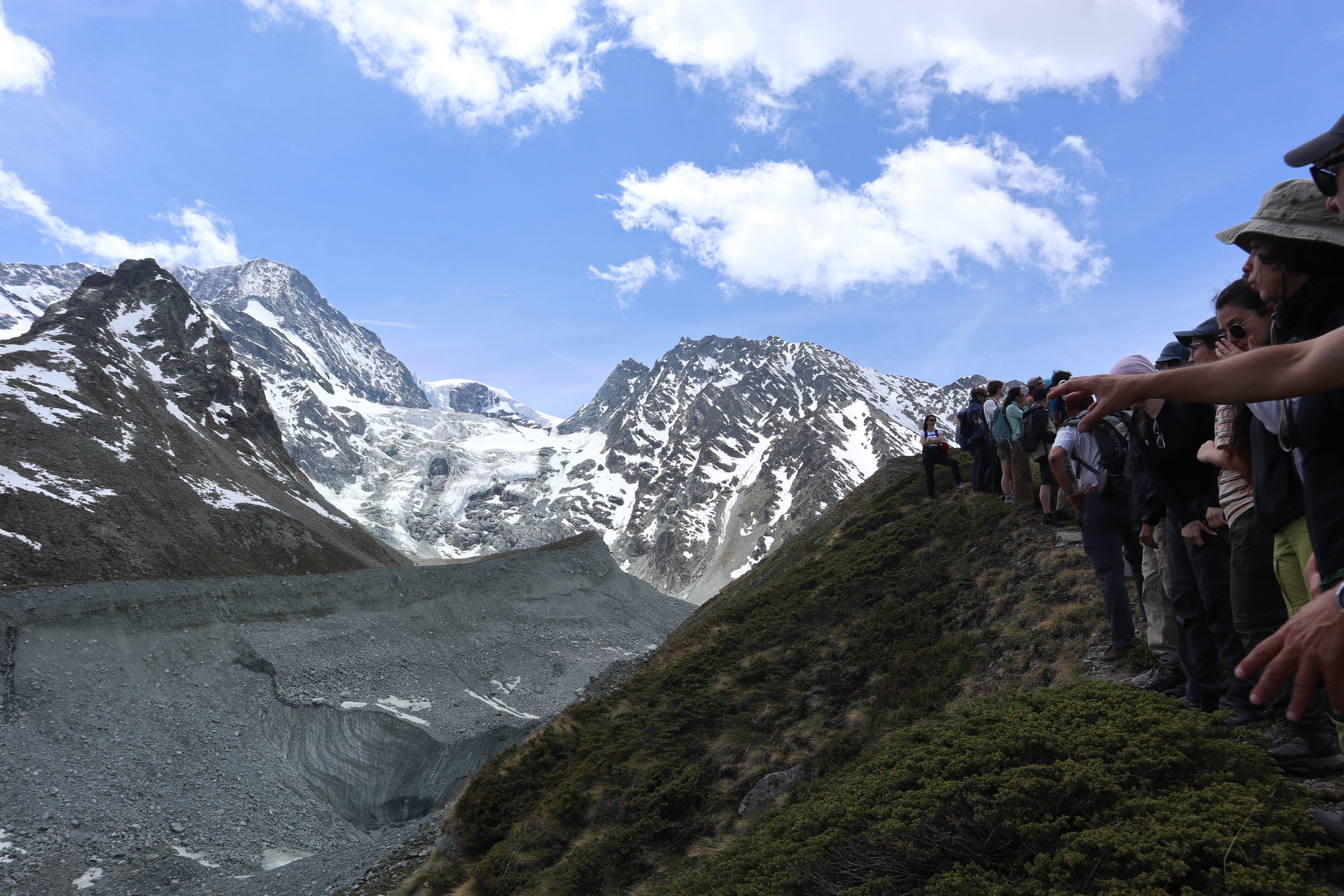
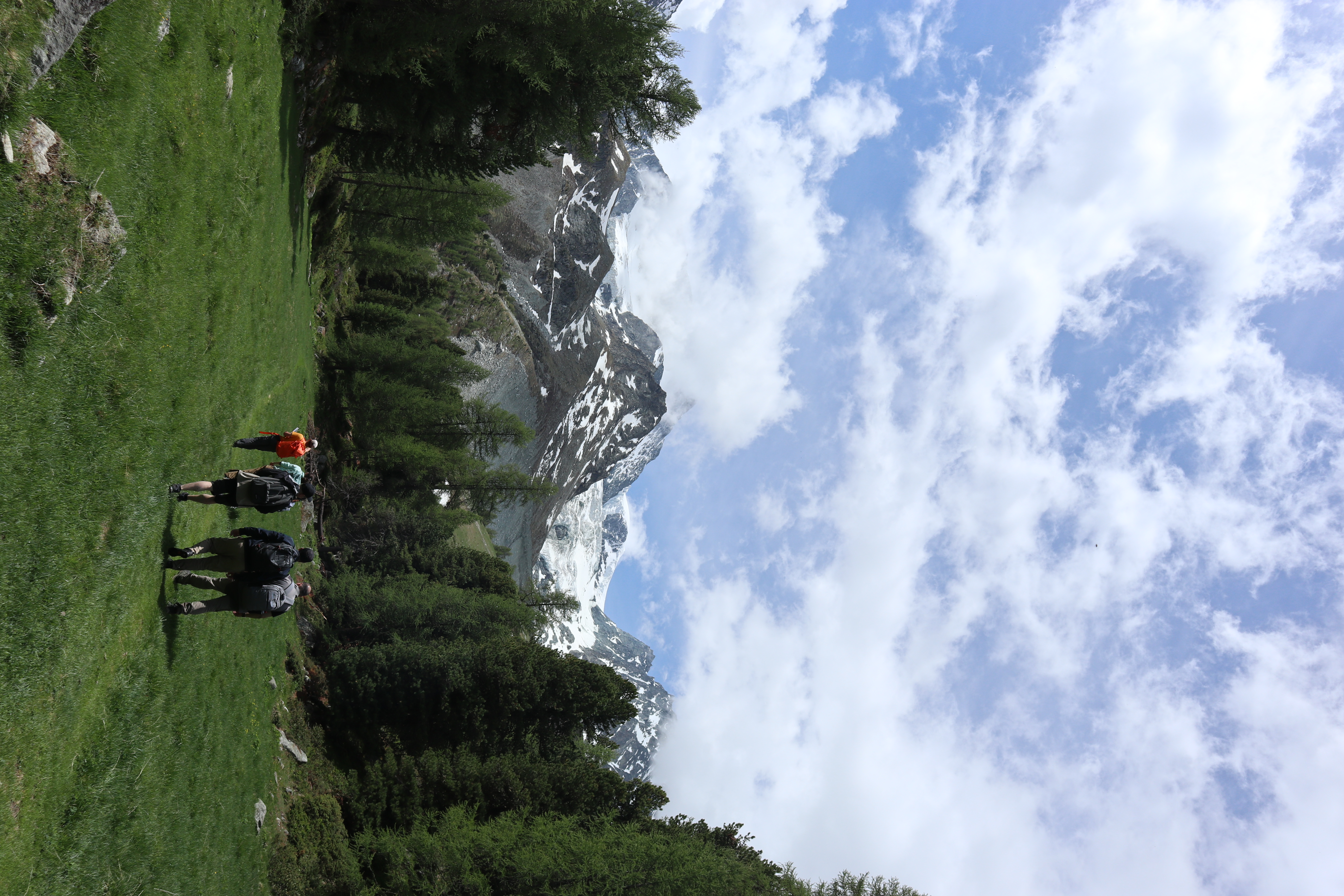
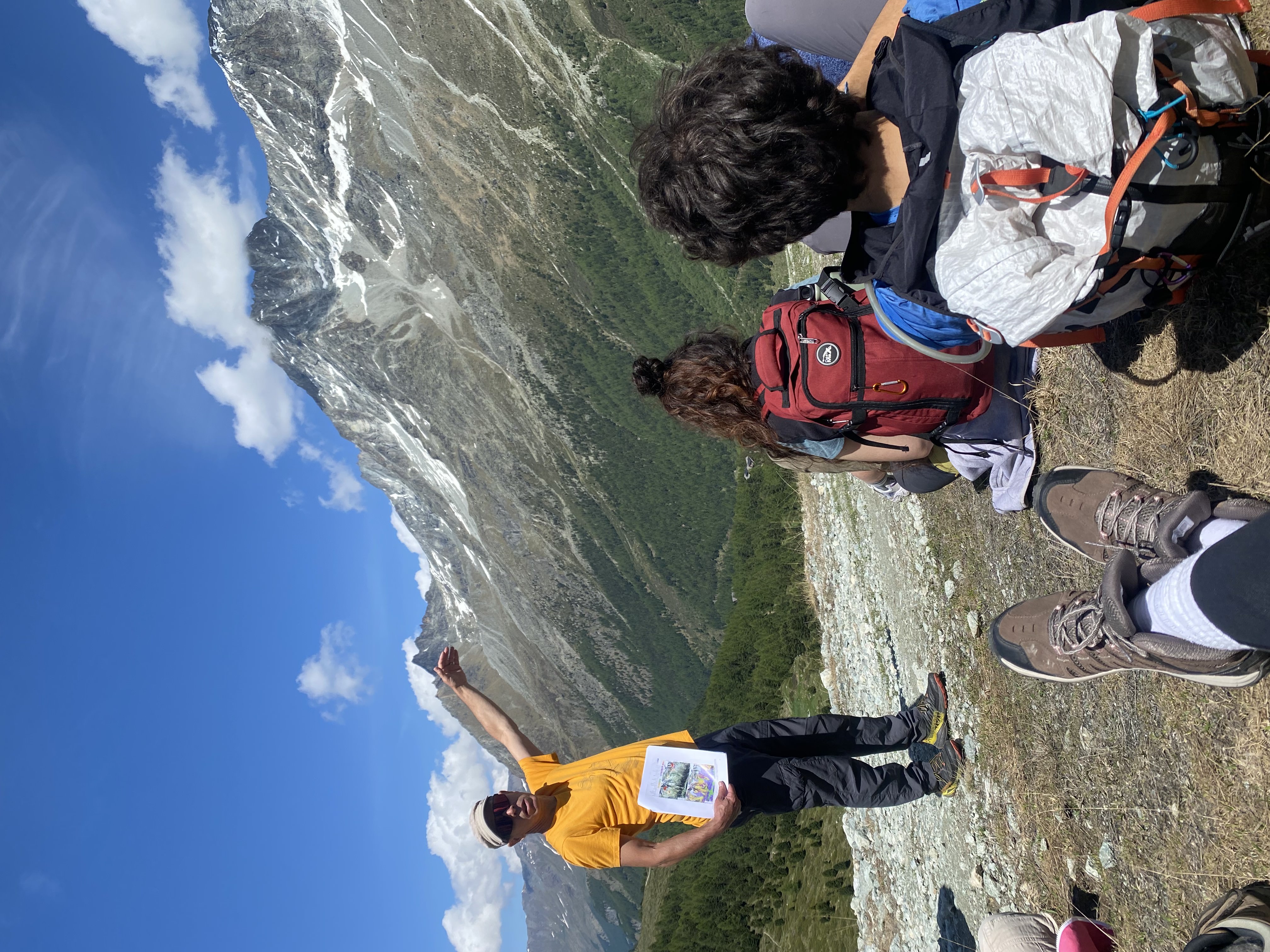
Continuing our journey to Arolla, after a quick rest and coffee break at the Grand Hôtel & Kurhaus, we started at an altitude of about 2000m and our last viewpoint was at an altitude of 2410m with a magnificent view of the glacier. We climbed over a prominent peak between two moraines on the top section, interspersed with several rest stops. During the rest stops we learned about the past and present of the glacier and also about the stone glaciers behind us and their annual movement trends.
This hike is in the top 3 most difficult mountain climbs of my life. But I loved it! The terrain became increasingly difficult and steeper in the part between the moraines. Due to the altitude, the weather was windy and cool and you had to be very careful where you stepped. For a moment I regretted not bringing my hiking poles, but it was still a doable distance. ;)
2nd day - 02.06.2026.
First visit to the study site, Mont d'Orge mountain and Lac du Montorge
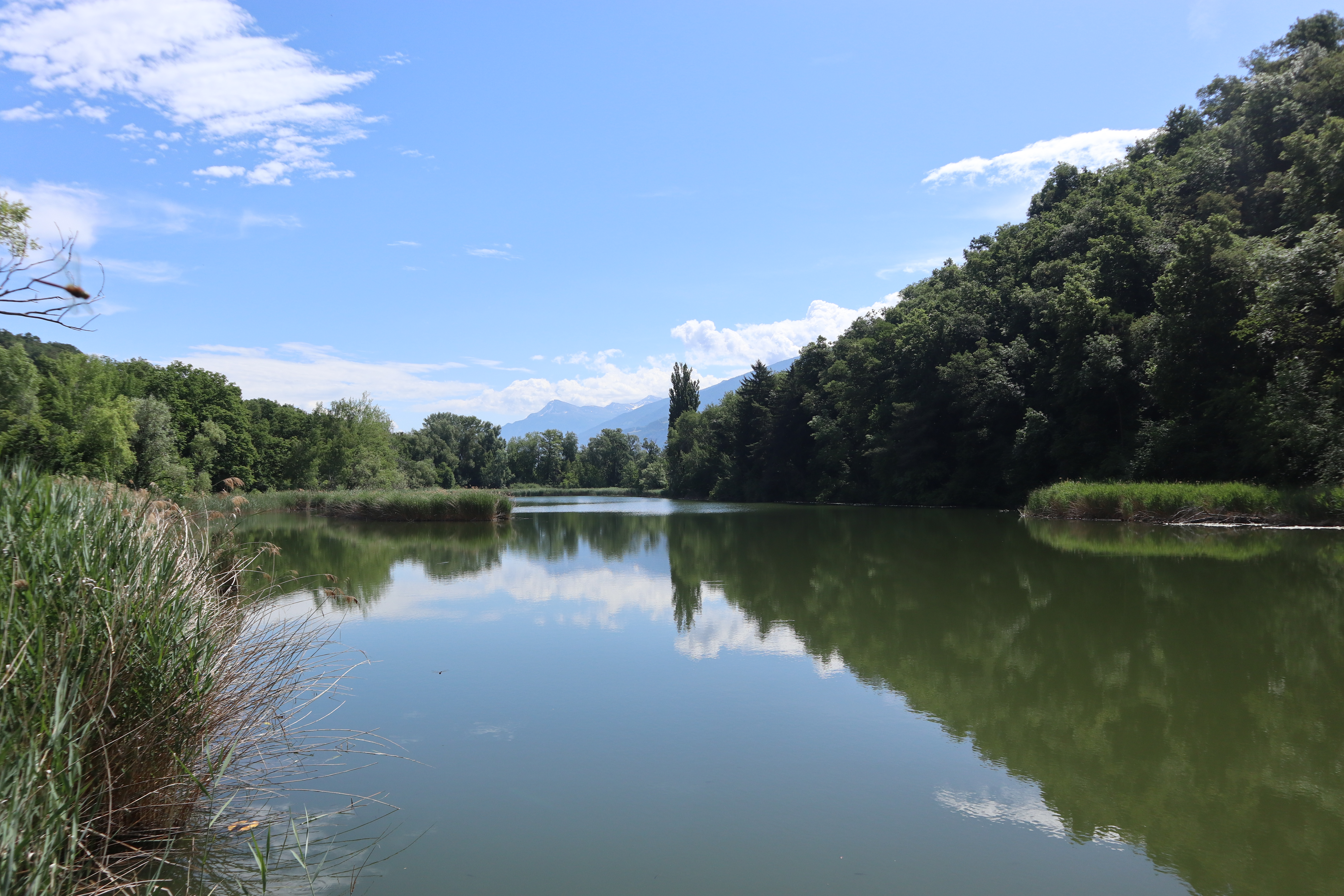
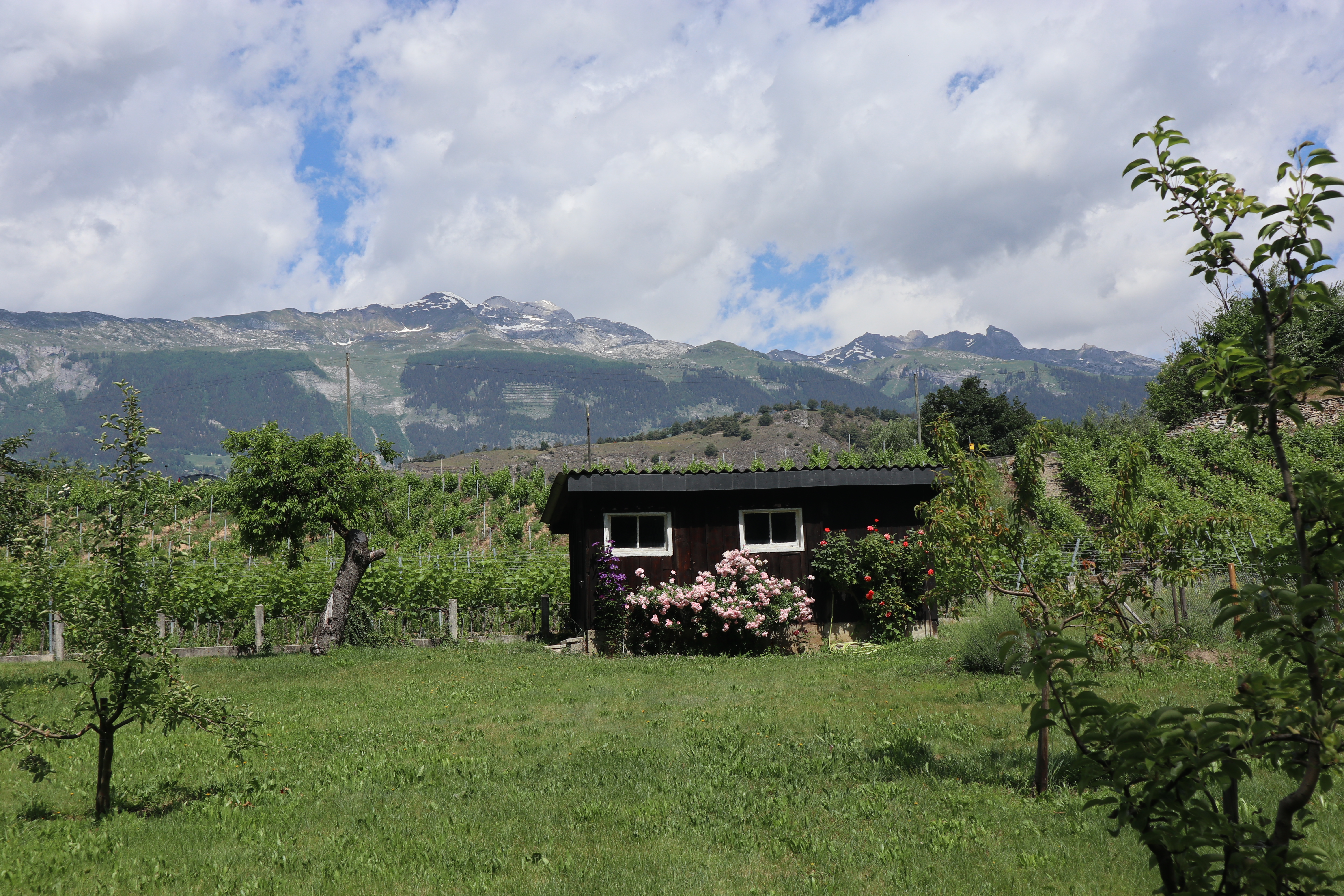
On the morning of the second day, we arrived early at the study site, where, accompanied by a professor from Lausanne and led by a national park expert, they presented the interesting facts about the mountain, how it has developed in the past and present from a nature conservation perspective. What agricultural pressure is there on the wildlife in the immediate vicinity of the mountain, and how agreements are being made regarding vineyards and orchards.
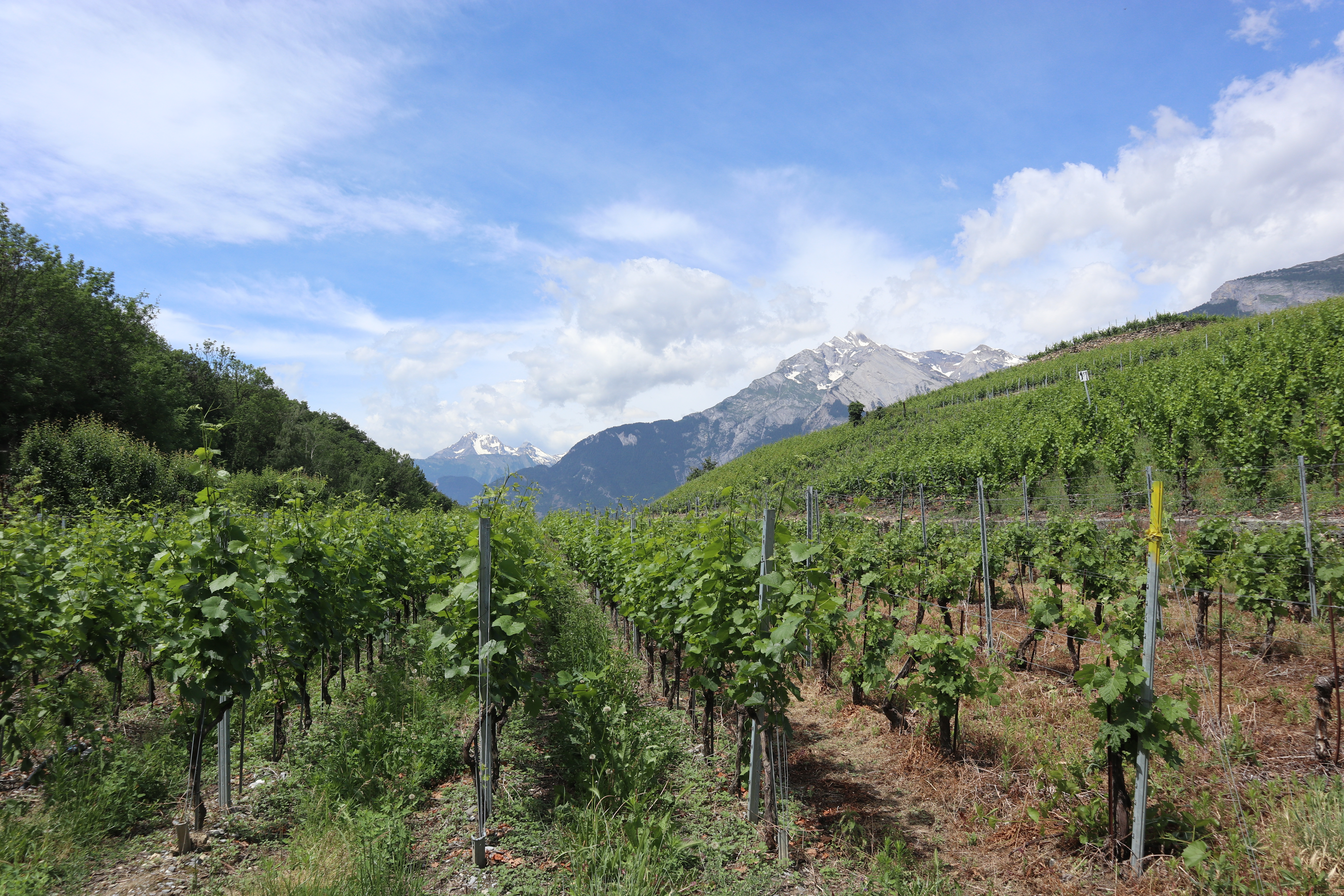
Montorge is an area with a unique microclimate, rising from the flatter part of the vast U-shaped valley near Sion. The southern areas of the mountain have developed a rocky environment and vegetation and fauna adapted to warmer conditions, while the forested northern side has developed a deciduous and much more temperate microclimate due to the cooler and wetter climate.
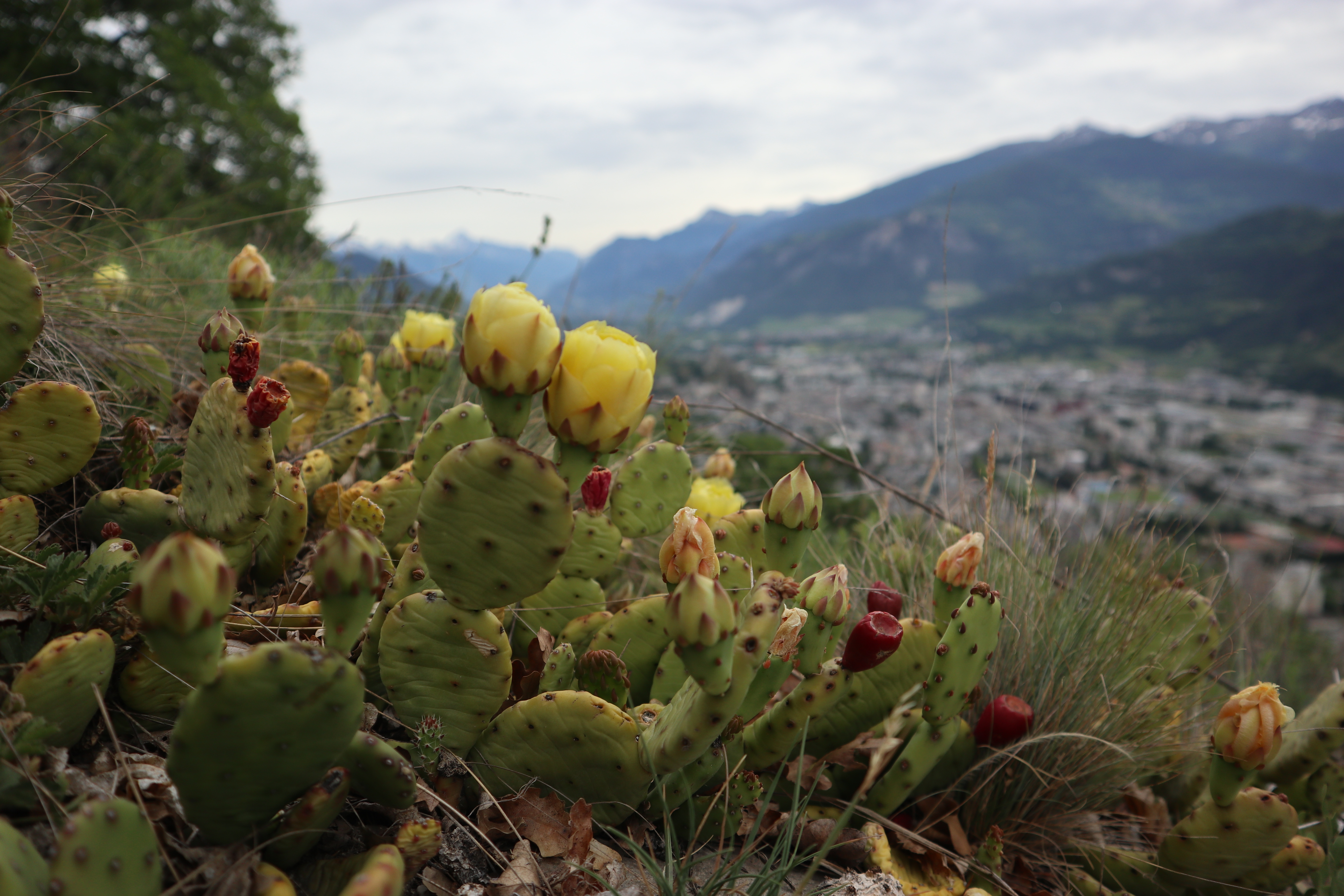
In addition to local characteristics, our attention was drawn to the strong spread of invasive species, such as Robinia viscosa (Glue locust), Erigeron Philadelphicus L., the common wild grape - Parthenocissus inserta and other cacti causing great concern on the southern side of the mountain, Opuntia Humifusa (~recumbent prickly pear cactus) and Opuntia Phaeacantha (~Colorado prickly pear cactus).
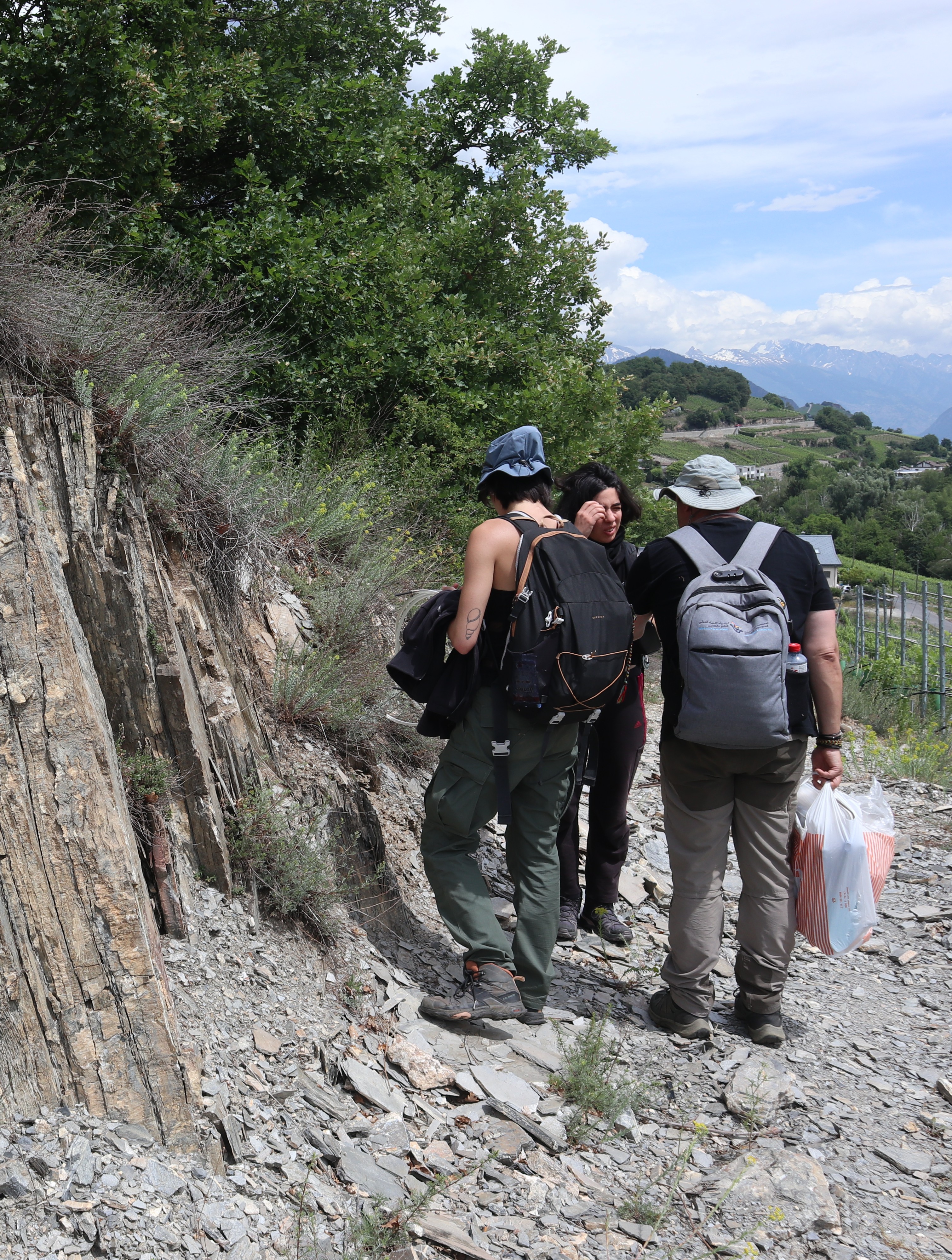
After the guided tour, I joined the Biodiversity team, where I was the only GIS and cartographer, the others were all very qualified biologists and with the help of their professor from Greece we successfully placed different pitfall traps. In addition, they showed us several insect collection methods, how we managed to collect the most arthropods and beetles from the ground and tree branches in 3 different areas: forested areas, grasslands and vineyards. Since sampling was only allowed outside the national park area, the first and further part of the survey took place in these areas.
For the field data collection, I created a pre-prepared map in QGIS, which we were able to use offline when visiting the study area using the QField mobile app. We recorded the locations of the sampling points, some observed points where we encountered invasive plants, and I also mapped the route we walked during the day using Strava.
.jpg)
.jpeg)
3rd day - 03.06.2026.
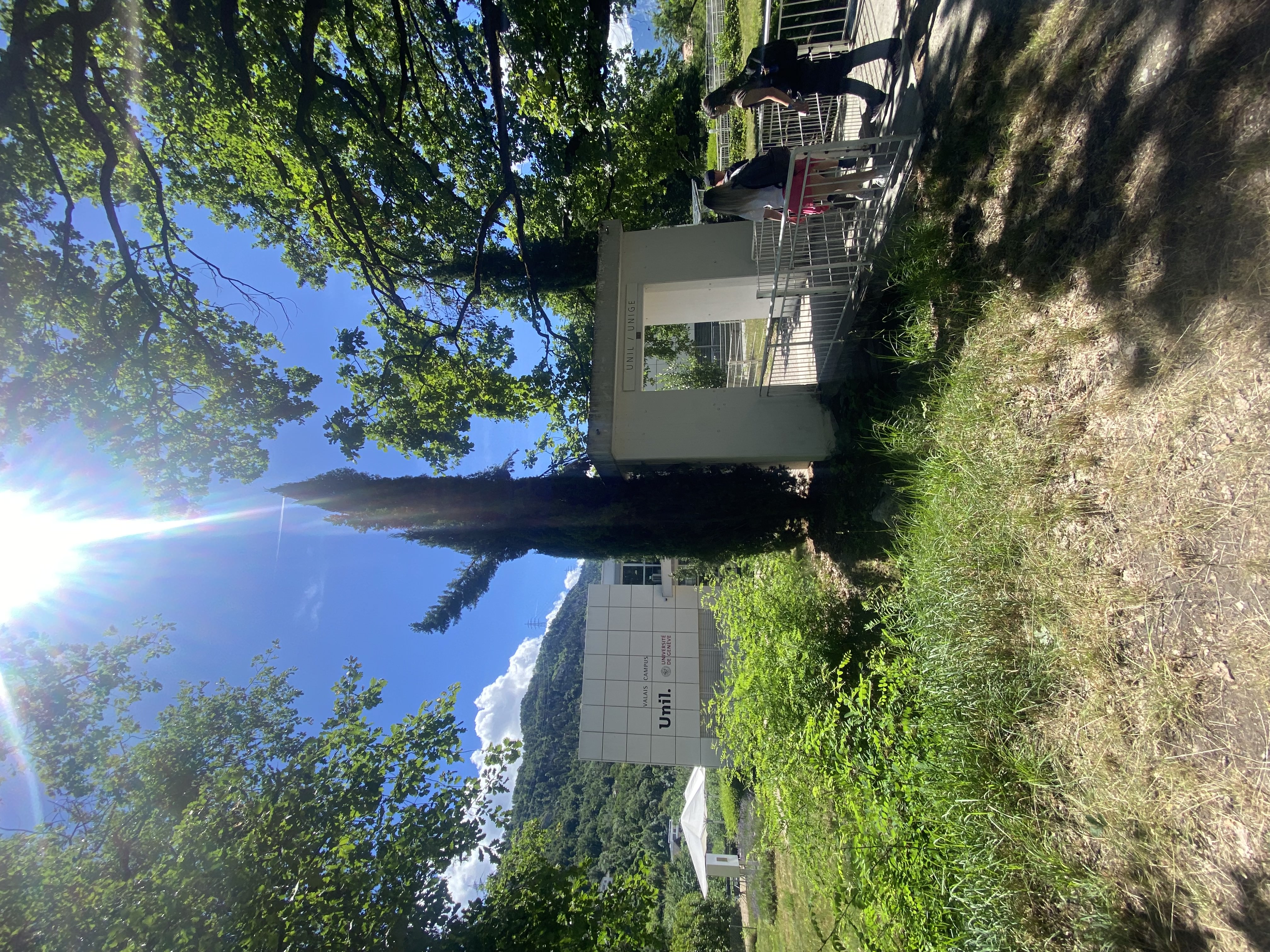
Site visit & attending Remote Sensing related class at University of Lausanne/UNIGE Valais campus.
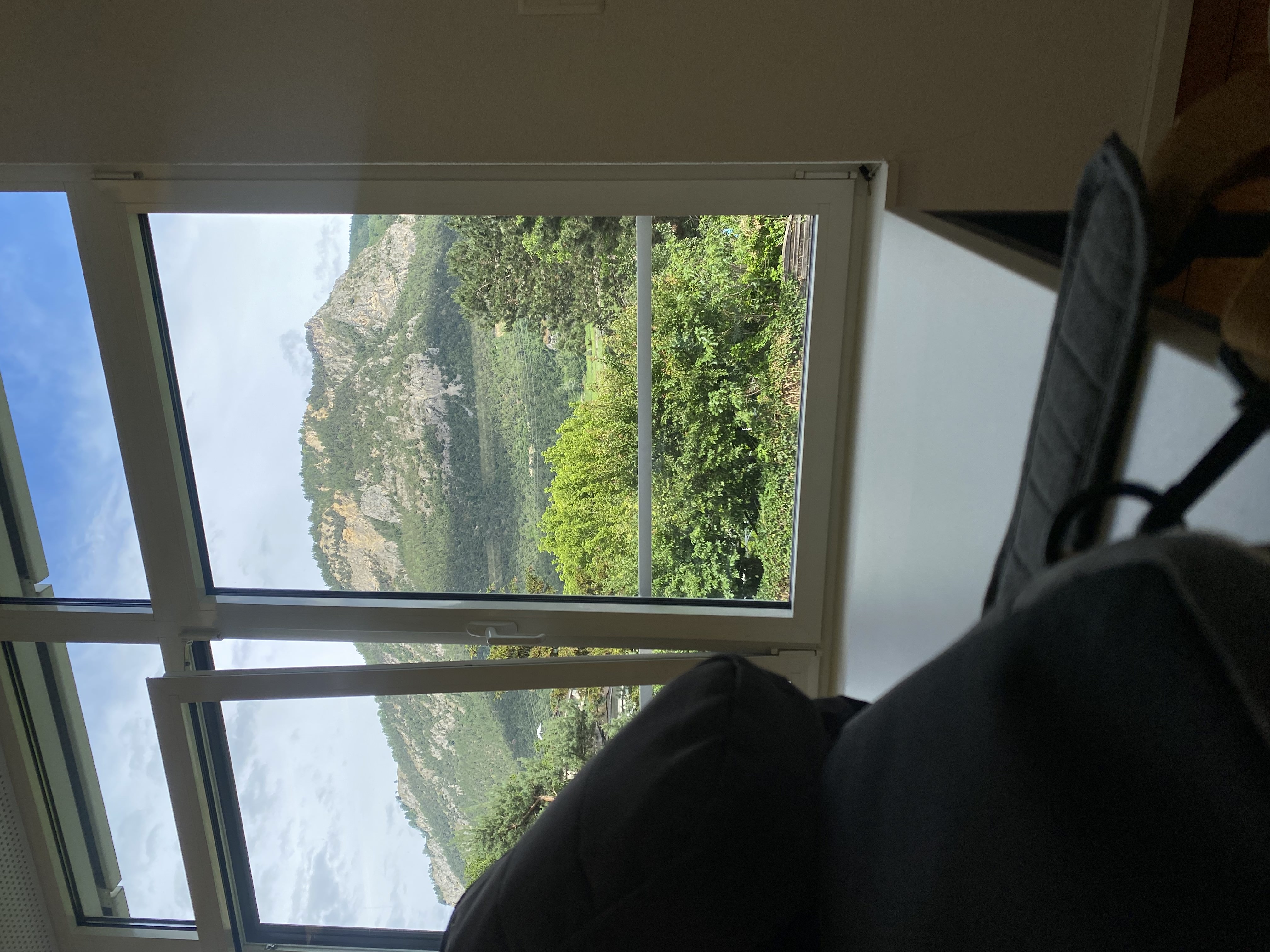
In addition to the field trips, we had the opportunity to attend classes held by professors from Bucharest in the afternoons, where we mainly learned about satellite image processing possible in the SNAP software or ArcGIS Pro and the practical use of various (not just vegetation indices) with Sentinel-2 images.
4th day - 04.06.2026.
Last visit to our study site Montorge with hike to explore Notre Dame de Mont d'Orge at the top.
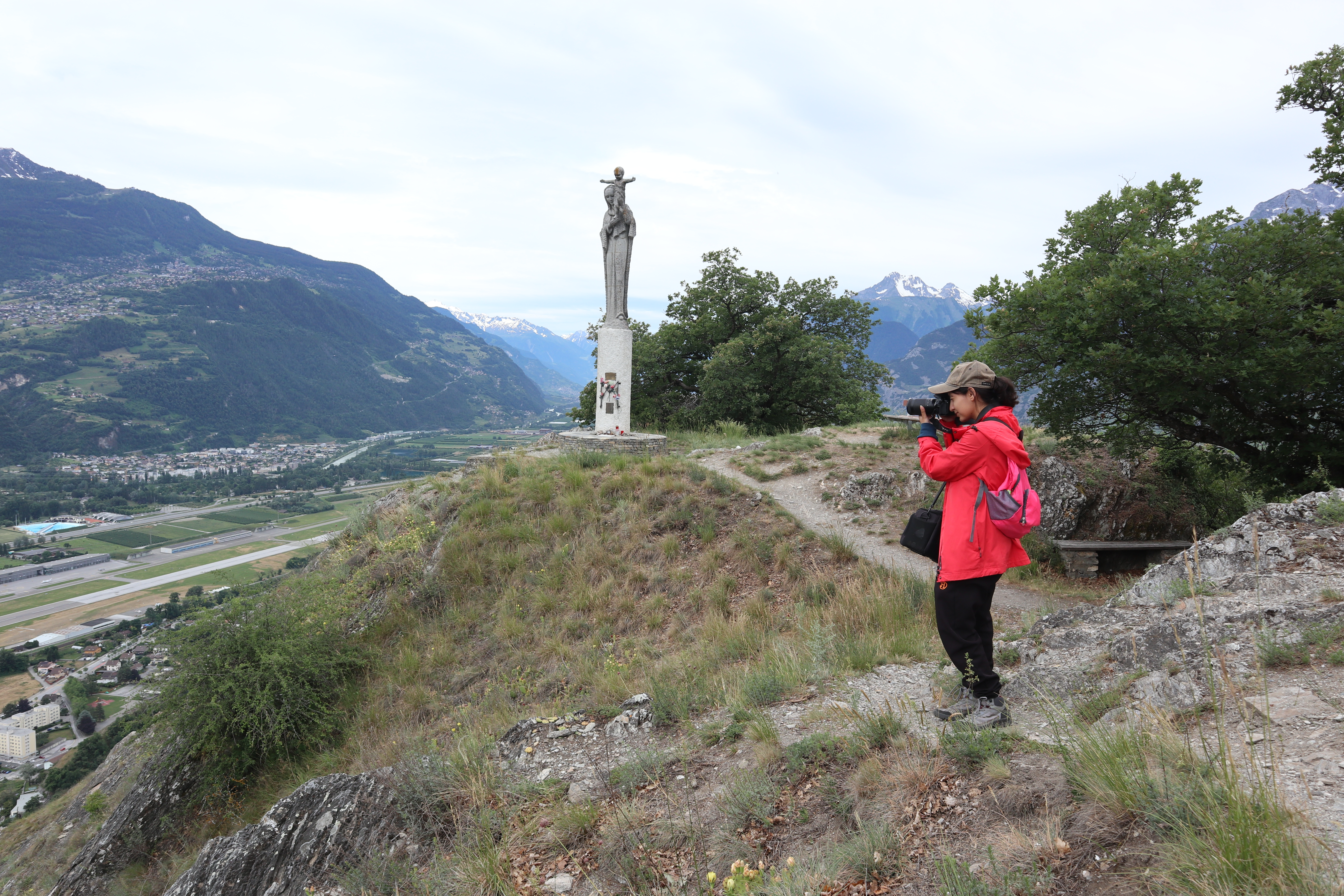
On the penultimate day, one of my Moroccan group members and I walked around the mountain once more and climbed to the top where the ruins of Notre Dame de Mont d'Orge are located. Yasmine wanted to observe birds and I took most of the pictures of the plants and the view. Sion is truly a unique place, and the many terraced vineyards completely "pull" you out of the alpine environment and it is quite difficult to realize where you are.
The trails on the mountain are visited by many people, school groups participate in the children's exhibition at the Maison de la Nature museum, and the nature trail is used by many people for walking and running, even with dogs - although, unfortunately, the large number of dogs is an ongoing problem in the area.
The end of the day was similar to any other day, after the field part everyone returned to the accommodation and the theoretical work took place. I tried to support my fellow biologists from a cartographic perspective, and I mainly worked on the presentation and poster design. You can find my work in my gallery of my Portfolio.
.jpg)
5th day - 05.06.2026.
Final presentations and closing gatherings with visit to the Lac Souterrain De Saint-Léonard.
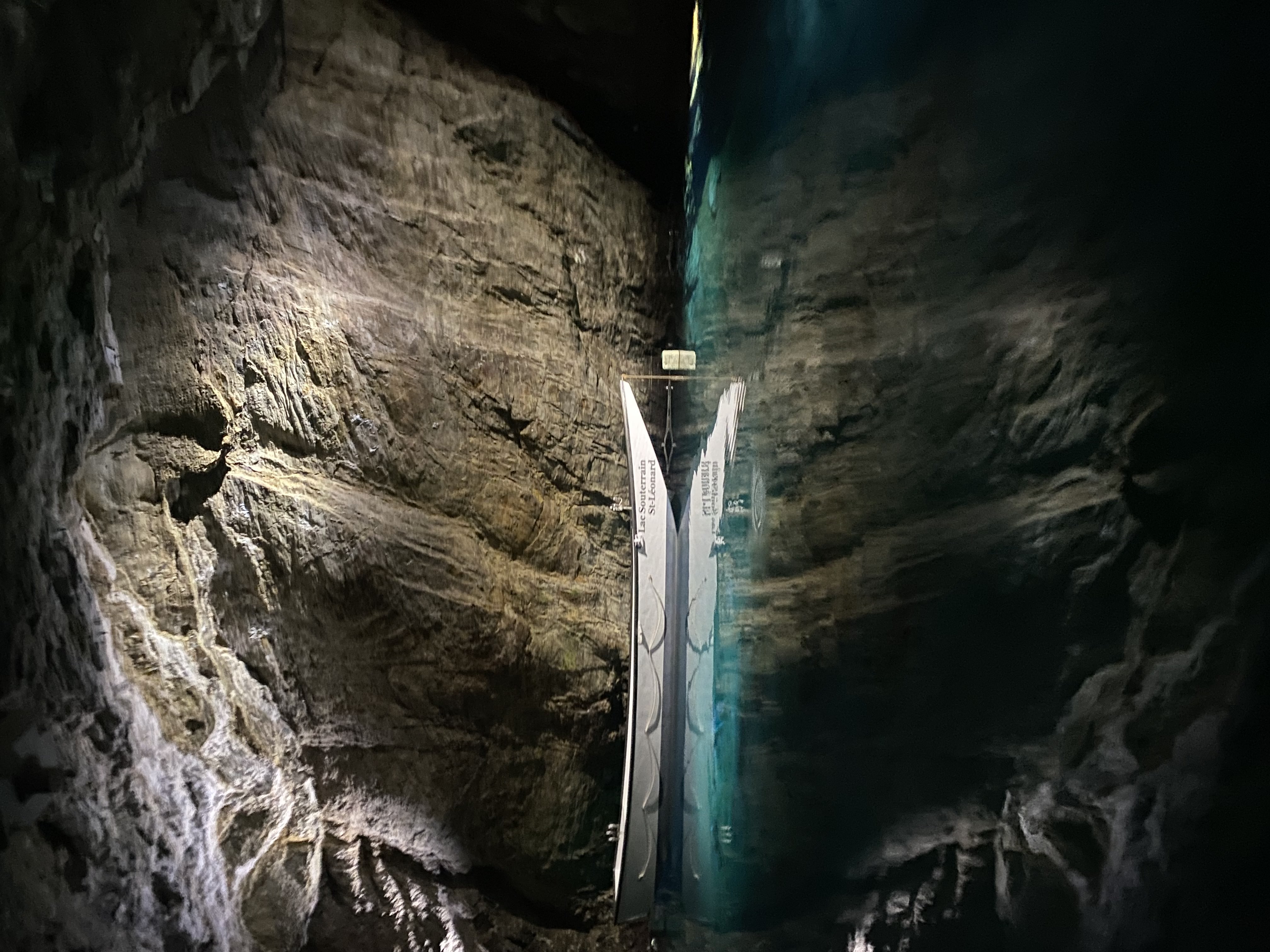
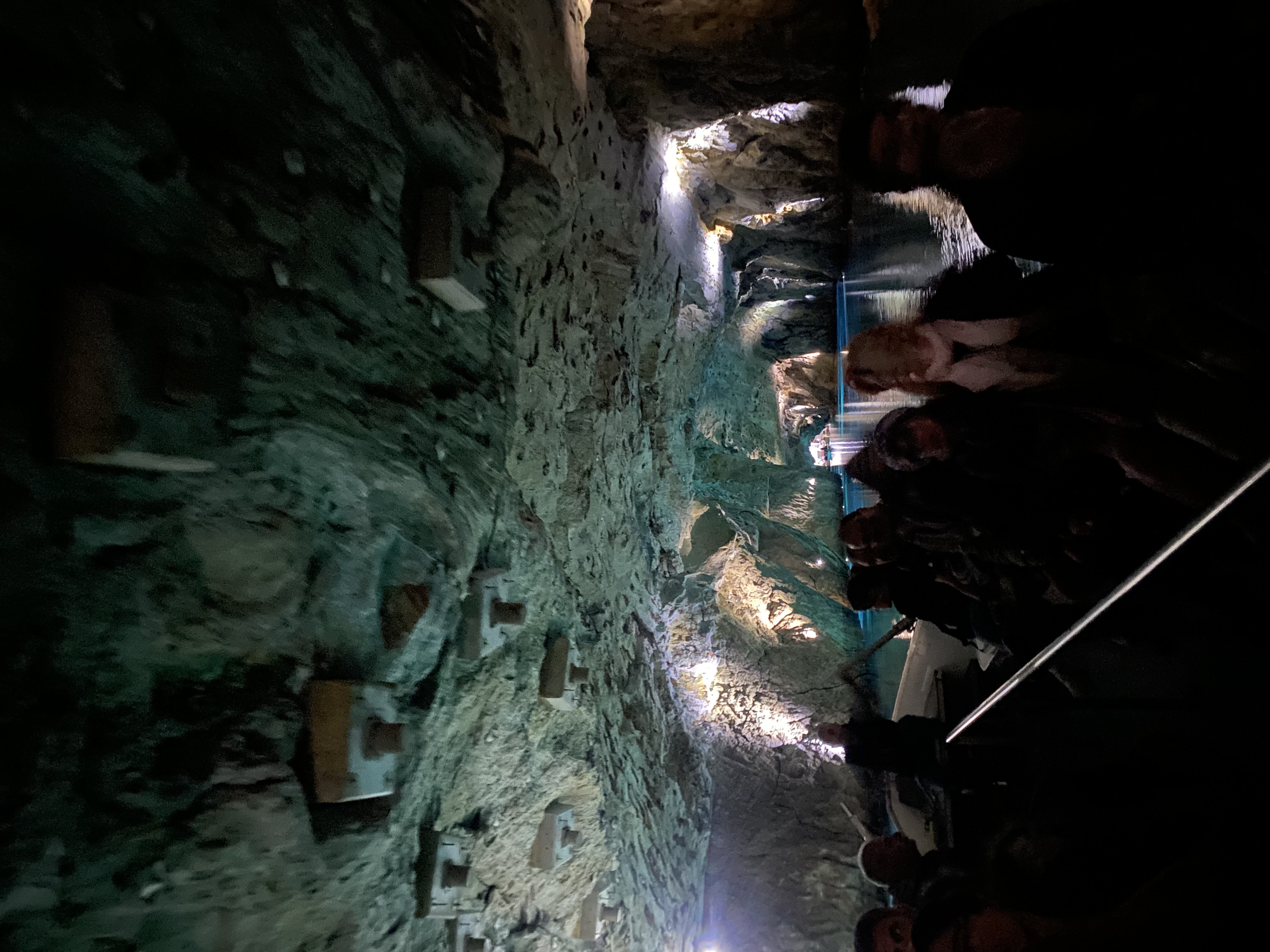
On the last day, we presented our results as a team to the mayor of Sion and another stakeholder in the university building. Then, to crown the whole week, we visited the Lac souterrain de Saint-Léonard. I quote: "With a length of 300 metres (980 ft) and a width of 20 metres (66 ft), it is the largest underground lake in Europe." It was a wonderful experience and learning about the formation of this lake and the methods that are currently required to maintain it. We even saw a few trout in the water, which were introduced to maintain the lake's ecosystem.
Then we gathered for a final dinner in an open dining room in the forest, where after the thank-you speeches and the meal everyone said goodbye to the professors. It was a very emotional farewell, as the whole week's work together brought people very close and I sincerely hope that we will see each other again somewhere in Europe in the future!
Thank you Sion for this experience! I have never seen a glacier up close and I was able to tick off a bucket list experience from my list, and the openness and enthusiasm of the people present was very uplifting throughout the week. It was an experience of a lifetime and I thank CIVIS and the two universities (University of Lausanne & University of Bucharest) for their enthusiastic work and perseverance.
Enchanté Sion! Au revoir.