My summer internship in 2024 took place at Z_GIS (University of Salzburg - Department of Geoinformatics), where I gained an insight into the world of GIS and scientific research. The aim of the internship was to actively participate in the preparation of scientific articles related to ESG (Environmental, Social, and Governance) regulations and deforestation, as well as to support project management tasks. This report summarizes my activities, knowledge and experience during the internship.
Main responsibilities and experience
During my internship, I worked in several closely related areas. One of my most important tasks was the creation of geovisualizations and illustrations for scientific articles. While creating these figures, I became more familiar with Adobe Illustrator and Adobe Express and mastered the visual requirements for scientific publications.
Another area of focus was the study of the structure of scientific articles. This included a deeper understanding of the research topics, with a particular focus on ESG regulations, European Union requirements and how Earth Observation (EO) and Geographic Information Systems (GIS) support these processes. During the internship, I was convinced that these topics are closely related to my interests, especially the issue of sustainability and deforestation.
Sustainability and research context
The aim of detailed sustainability reporting is to create a transparent and accountable business environment that promotes sustainable investments and increases corporate responsibility. Companies are increasingly integrating sustainability into their core strategies, in line with the EU’s broader environmental and social goals.
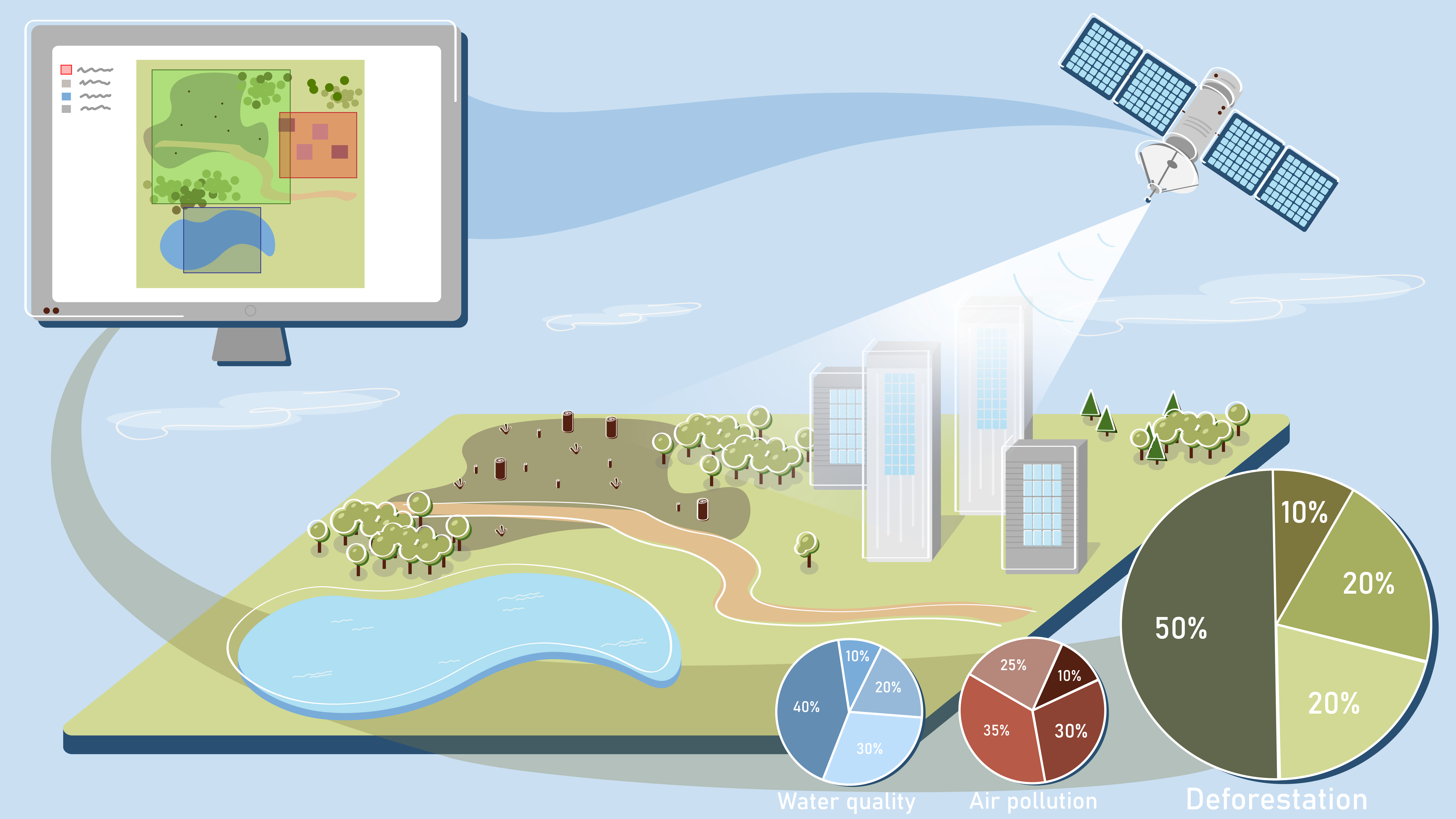
Earth Observation and GIS technology have become critical tools for conducting large-scale environmental analyses. EO data is essential for collecting spatial data on land, water and atmosphere, which makes it essential for sustainability compliance reporting, for example under the CSRD (Corporate Sustainability Reporting Directive) or the EU Deforestation-Free Products Regulation (EUDR). I was able to see the final stages of these research projects and participate in the final refinements.
The internship was carried out in a university environment, which was inspiring and supportive. During my daily work, I had a great workstation and the company of my colleagues was also good. Working with Professor Thomas Blaschke was an extremely positive experience. He was responsive, helpful and extremely supportive, set realistic expectations for the tasks and always gave constructive feedback at the end of the tasks. This work dynamic confirmed that freelance work could also be a good fit for me in the future.
Software used and lessons learned
During the internship, I used several software, including Zotero for managing scientific articles and sources, Adobe Illustrator and Adobe Express for visualizations, and Microsoft Office applications. Using these tools contributed to my professional development and efficient work.
The lessons learned during the internship are as follows:
- I delved into the expectations of editing and structuring scientific articles.
- I gained practical experience in creating geovisualizations and illustrations.
- I learned more about ESG regulations and the role of GIS in sustainability reporting.
- I have personal experience with the final stages of scientific research and teamwork.
Summary
My summer internship at Z_GIS was extremely useful and educational. I not only deepened my professional knowledge, but also gained valuable experience in the fields of scientific research, project management, and teamwork. The time spent here has confirmed the correctness of my chosen career and motivated me to continue learning and developing. I would like to thank you for the opportunity and the support of my professor.